Houston Sprinkler Questions We Actually Get on the Phone
Watering days, clay, backflow, same-day parts, and when a zone that will not shut off is an emergency.
The most common signs are: water spraying straight up into the air when the head should be rotating or spraying in a pattern; a constant wet spot near a head even when the system isn't running (indicating the head is leaking from the base); a dry patch in the lawn that the surrounding area doesn't have; or a head that's clearly cracked, tilted, or no longer rising properly. If a zone is running but you're not seeing water movement across the lawn, walk the zone while it's running and look for missing or misdirected spray patterns.
Houston Water keeps year-round conservation rules even when the city is not in a named drought stage: outdoor irrigation is limited to two days per week by address, and you should not run automatic systems in the heat of the day (Houston Public Works currently points homeowners to mornings before 10 a.m. or evenings after 8 p.m. unless a drought stage tightens that window). Odd/even days still apply. MUDs in Katy, The Woodlands, Humble, and Bridgeland publish their own stages — we program the meter you are actually billed on. Check Houston Public Works and your district before you copy a neighbor's schedule. Fines start around $100 when a stage is mandatory.
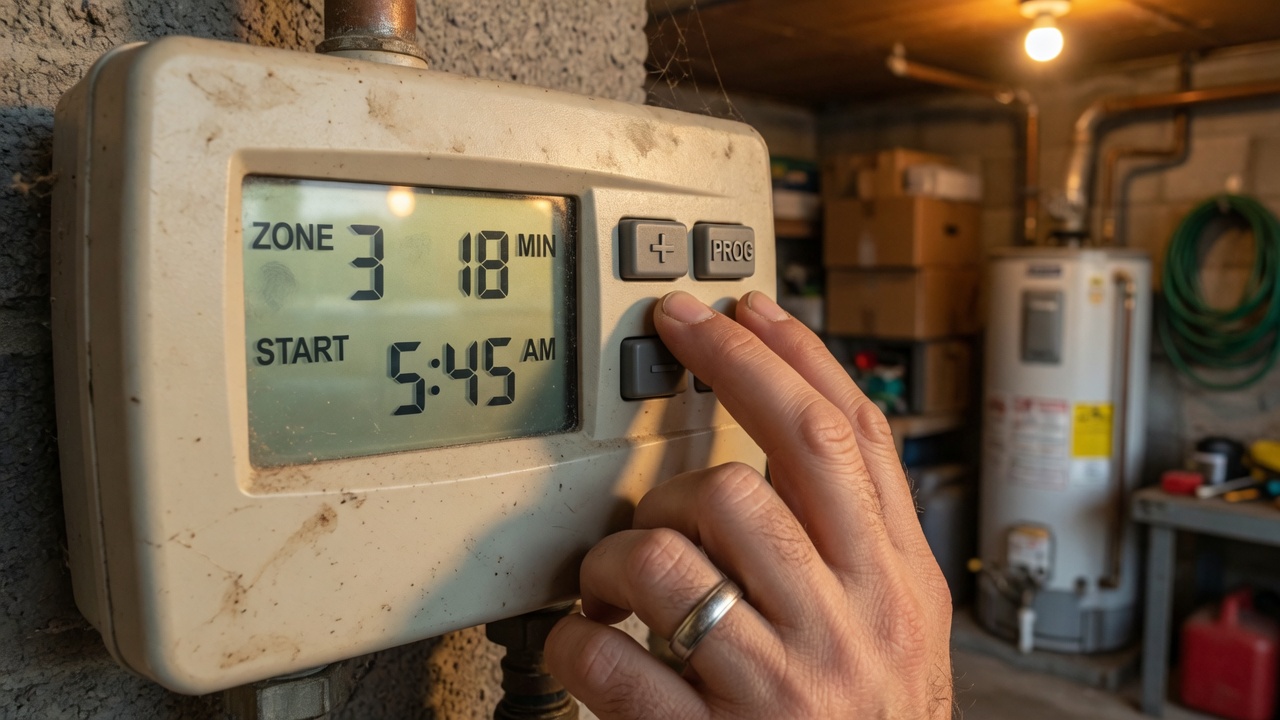
For most Houston lawns with St. Augustine or Bermuda grass, twice a week is plenty — even in peak summer — as long as you're applying enough water per cycle to reach 1/2 to 3/4 inch per zone. Running every day for 5 minutes is far less effective than running twice a week for 20–25 minutes, because short cycles only wet the top inch of soil and train roots to stay shallow. Morning watering (before 10am) dramatically reduces evaporation loss. The goal is to water deeply, less frequently. We can set your controller to do exactly this.
In many cases, yes. We reserve same-day appointment slots Monday through Saturday for service calls, and we carry the most common repair parts on every truck — Rain Bird, Hunter, and Toro heads, valve solenoids and diaphragms, common PVC fittings, and wire connectors. If you call before noon on most days, there's a good chance we can be there that afternoon. Complex repairs or new installations require scheduling a dedicated appointment, but we always try to get there as quickly as possible. Emergency situations — like a system that won't shut off — are prioritized.
Yes, we do both. Our residential work makes up the majority of our service calls, but we maintain several commercial accounts including apartment complexes, retail centers, and office parks across the Houston area. Commercial systems tend to be larger and more complex, with more zones and often commercial-grade equipment. We're familiar with all major commercial irrigation brands and can work with property managers, HOA management companies, and landscaping companies directly. We work directly with property managers, HOA companies, and landscaping contractors.
We work with everything out there, but the brands we work with most frequently are Rain Bird (the 1800 series spray heads are the most common in Houston residential), Hunter (PGP rotors are everywhere), Toro (T-5 and T-Bird), Orbit, Weathermatic, and K-Rain. We stock Rain Bird and Hunter parts on every truck since they're the most common. For less common brands, we typically have parts within 24 hours. We don't recommend any particular brand over another — it depends on your system, your water pressure, and your coverage needs.
Pricing varies by head type — basic pop-up spray heads are the most affordable; high-end rotors cost more. Every visit starts with an honest diagnosis and an upfront written quote before any work begins. We don't charge by the hour — pricing is by the repair, so you know what you're committing to before we pick up a tool.
This is almost always one of two problems: either your controller doesn't have a rain sensor (or the rain sensor has failed), or the controller is set to override the rain sensor. A functional rain sensor should automatically pause your irrigation when it detects rainfall and keep it paused until the sensor dries out to a set threshold. If you're watching your sprinklers run in the middle of a downpour, call us — this is not just wasteful, it can result in a violation notice from Houston Water under Stage restrictions. We can install a rain sensor and integrate it with any existing controller.
It absolutely could be. Underground irrigation leaks are one of the most common causes of unexplained water bill spikes in Houston. A broken mainline can push 10–20 gallons per minute into the soil, meaning even a brief system cycle could result in hundreds of gallons of wasted water. If you notice wet patches in your lawn that don't correspond to rain, soft spots in the soil, or areas where the grass is noticeably greener than surrounding areas, those are signs of a leak. We offer leak detection as a standard service call and can usually locate underground breaks within a single visit.
No. We don't add travel fees for any location within our standard service area, which covers Houston and all the surrounding communities listed on our service areas page. That includes Katy, Sugar Land, The Woodlands, Pearland, Cypress, Spring, Humble, Kingwood, League City, Missouri City, and Friendswood. If you're further out and aren't sure whether we cover your area, just call and ask — we can usually tell you in 30 seconds.
Houston doesn't get the hard freezes that northern climates do, so you don't typically need to blow out your irrigation lines with compressed air like they do in Colorado. However, exposed components — especially backflow preventers — can crack in a hard freeze. February 2021 was a brutal reminder that Houston isn't immune to extended deep freezes. We recommend insulating exposed backflow assemblies and shutting down irrigation systems when extended subfreezing temperatures are forecast. We do offer a winterization service that covers insulation, controller shutdown, and an inspection of vulnerable components.
For common repairs — replacing a few heads, fixing a valve solenoid, diagnosing and repairing a leak — most jobs take 45 minutes to 2 hours. We don't rush, and we always run every zone after a repair to confirm the system is working correctly before we leave. More complex jobs like underground leak repair, full controller replacements, or new zone additions may take half a day or more and will be scoped out upfront.
Yes. We work with all the major smart controller brands — Rachio 3, Rain Bird WiFi, Hunter Hydrawise, Orbit B-hyve, and others. We'll set it up, connect it to your WiFi, download the app, and show you how to use the seasonal adjustment and skip features. We don't just set it and leave — we make sure you understand how to manage it yourself. Smart controller installation and setup is quoted upfront based on the model and your existing wiring.
A backflow preventer is a device that sits on your irrigation supply line and prevents contaminated water (from your lawn, fertilizers, pesticides) from flowing backward into the city's drinking water supply. It's a critical piece of public health infrastructure. Texas law requires that backflow preventers on irrigation systems be tested annually by a licensed tester. The tester checks that the device is functioning within pressure specifications and documents it for the water authority. Failing to test — or failing the test and not repairing the device — can result in fines and eventually service disruption. We test all types and submit the reports on your behalf.
We do offer a simple annual maintenance plan for homeowners who want peace of mind without having to remember to call. The plan includes a spring startup inspection, a mid-season head and pressure check, annual backflow testing and report filing, and a late-season walkthrough before the weather cools down. It also includes a discount on any additional repairs during the contract period. Call us or ask when we're on-site if you want to sign up.
Honest answer: it depends on the builder and how old the house is. Builder-grade irrigation systems are often designed to the minimum code requirements and installed by the lowest-bidding subcontractor. This isn't always a problem — some builders do it right — but we frequently see homes with too few zones for the yard size, heads placed for installation speed rather than actual coverage, undersized mainlines, and controllers set with default schedules that aren't remotely appropriate for Houston's climate. We offer a system inspection that gives you an honest assessment of what you have and what (if anything) needs to be improved.
Rebate programs in Houston vary by utility and change frequently. Houston Water, CenterPoint, and some MUD districts periodically offer rebates for water-efficient irrigation upgrades. We're familiar with the current programs and will let you know if any apply to your upgrade at the time of service. We can provide the documentation you need to apply.
First, locate your irrigation shutoff valve — it's usually a ball valve near the backflow preventer or at the connection to the city supply line. Turning it off will stop the flow immediately. If you can't find it or it won't turn, call the city water emergency line to have your service shut off temporarily, then call us. For true emergencies — water gushing, flooding toward a structure — we treat these as priority calls. If you have our number in your phone and call during business hours, we'll get someone to you as fast as possible.
Didn't Find Your Answer?
Call or text us directly — we're happy to answer questions before you schedule anything. No obligation, no sales pitch.
(832) 786-4444