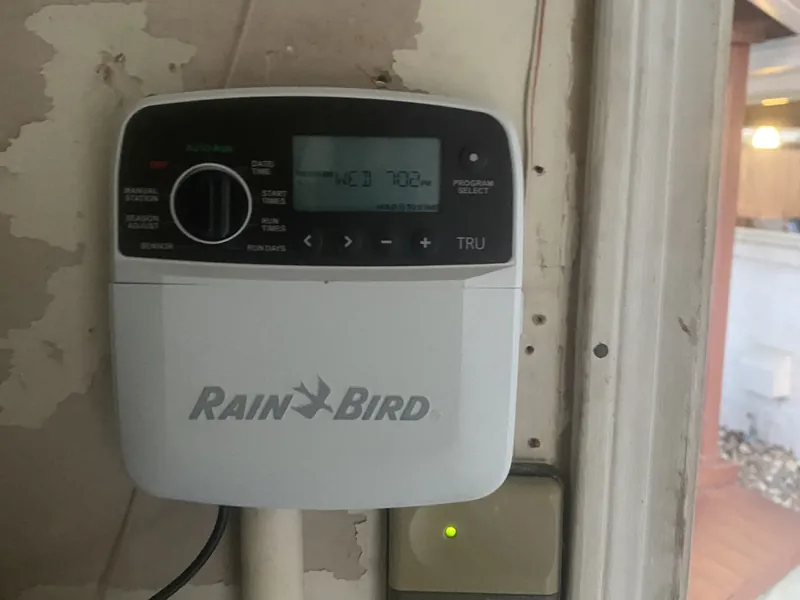
A typical residential sprinkler controller replacement may cost about $250 to $750 installed, depending on the number of irrigation zones, controller brand, wiring condition, indoor versus outdoor installation, and whether the homeowner chooses a standard or Wi-Fi smart controller.
More complicated installations can cost $800 to $1,500+, particularly when additional electrical work, wiring repairs, weatherproof enclosures, sensors, or commercial-grade controllers are required.
Sprinkler Controller Replacement Cost at a Glance
| Type of Work | Typical Price Range |
|---|---|
| Basic controller replacement | $250–$450 |
| 6–8 zone controller | $300–$500 |
| 12–16 zone controller | $400–$700 |
| Wi-Fi smart controller upgrade | $400–$800 |
| Premium smart controller installation | $500–$1,000+ |
| Outdoor controller replacement | $400–$800 |
| Controller + wiring troubleshooting | $450–$900 |
| Controller + rain sensor | $450–$850 |
| Commercial controller | $750–$2,500+ |
These are general planning ranges, not guaranteed prices.
What Is a Sprinkler Controller?
The sprinkler controller—sometimes called an:
- irrigation controller
- sprinkler timer
- irrigation timer
- sprinkler control box
- irrigation control panel
—is the device that tells your irrigation system when to turn on, which zones to operate, and how long each zone should run.
Modern controllers can also manage:
- Multiple watering programs
- Seasonal adjustments
- Rain sensors
- Freeze sensors
- Soil moisture sensors
- Flow sensors
- Wi-Fi connectivity
- Smartphone control
- Weather-based watering
- Water-use reporting
When a controller fails, homeowners sometimes assume the entire irrigation system is broken.
But the problem could actually be the controller, transformer, wiring, solenoid, rain sensor, common wire, or field wiring.
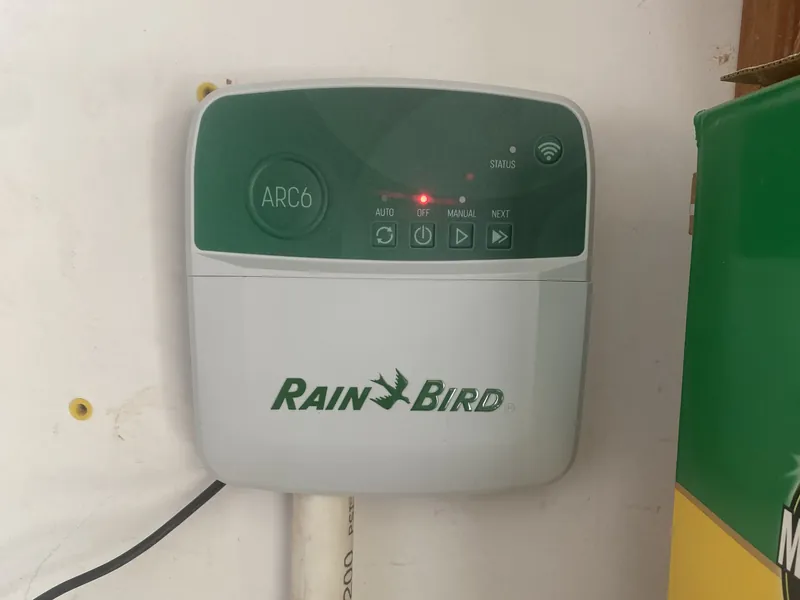
Average Sprinkler Controller Replacement Cost
For a straightforward residential replacement, budget approximately:
Basic system
$250–$450
Usually:
- 4–8 zones
- Existing wiring works
- Controller is easily accessible
- Standard replacement controller
- Minimal programming
Mid-range system
$400–$700
Usually:
- 8–16 zones
- Better-quality controller
- Wi-Fi capability
- Some wiring troubleshooting
- System programming
- Zone verification
Advanced system
$600–$1,000+
May include:
- Smart irrigation controller
- Outdoor installation
- Weather-resistant enclosure
- Sensor integration
- Wiring repairs
- 12–24+ zones
- Advanced programming
- Flow monitoring
What Determines Sprinkler Controller Replacement Cost?
1. Number of Sprinkler Zones
The more irrigation zones your property has, the more capacity the controller needs.
For example:
| Zones | Typical Controller Category |
|---|---|
| 4–6 zones | Small residential |
| 6–8 zones | Standard residential |
| 8–12 zones | Medium residential |
| 12–16 zones | Large residential |
| 16–24 zones | Large estate/light commercial |
| 24+ zones | Commercial/specialty |
A homeowner should not automatically replace a 12-zone controller with a 6-zone controller simply because only six zones currently operate.
Unused wires may represent:
- Future zones
- Abandoned zones
- Landscape expansion
- Drip irrigation
- Previous system modifications
The system should be evaluated first.
2. Standard vs. Smart Sprinkler Controller
One of the largest cost differences is whether the homeowner chooses a traditional timer or a smart Wi-Fi controller.
Standard controller
Usually provides:
- Start times
- Watering days
- Run times
- Multiple programs
Estimated installed cost:
$250–$500
Smart Wi-Fi controller
May provide:
- Smartphone control
- Weather-based watering
- Automatic seasonal adjustment
- Notifications
- Remote system control
- Watering history
- Rain-delay functions
Estimated installed cost:
$400–$800+
A smart controller may be particularly useful for homeowners who:
- Travel frequently
- Manage rental properties
- Want to monitor irrigation remotely
- Frequently adjust watering
- Want better control over water consumption
3. Indoor vs. Outdoor Controller
Indoor controllers are generally easier to replace.
Outdoor controllers may require:
- Weather-resistant cabinets
- Electrical connections
- Proper mounting
- Sealing
- Grounding
- GFCI protection
- Outdoor-rated components
Indoor replacement
Approximately:
$250–$600
Outdoor replacement
Approximately:
$400–$800+
4. Existing Sprinkler Wiring
This is where a seemingly simple controller replacement can become a troubleshooting job.
A new controller will not fix:
- Broken common wires
- Shorted field wires
- Damaged valve wires
- Bad solenoids
- Incorrect splices
- Underground wiring damage
If the technician installs a new controller and a zone still doesn’t operate, the controller may never have been the original problem.
That is why testing should happen before replacement whenever possible.
Sprinkler Controller Diagnostic Checklist
Before recommending a controller replacement, a technician should check:
Power
- Is the controller receiving 120V power?
- Is the outlet working?
- Has the GFCI tripped?
- Is the transformer working?
- Is the controller fuse damaged?
Controller output
Typical irrigation systems commonly send approximately 24 VAC to the field valves.
The technician should verify:
- Controller output voltage
- Individual station output
- Common terminal
- Master valve terminal if applicable
Field wiring
Check for:
- Open circuits
- Shorts
- Damaged common wire
- Poor waterproof connections
- Underground wire damage
Solenoids
A bad valve solenoid can sometimes make homeowners believe their controller has failed.
Programming
Check:
- Current time
- Watering days
- Start times
- Seasonal adjustment
- Rain delay
- Sensor settings
- Program A/B/C conflicts
Repair or Replace the Sprinkler Controller?
Repair the controller when:
- Programming was incorrect
- Transformer can be replaced
- Fuse has failed
- Loose wiring is causing the issue
- Sensor settings are incorrect
- Backup battery needs replacement
- Controller is otherwise in good condition
Consider replacement when:
- Display is blank despite proper power
- Controller repeatedly loses programming
- Station outputs are failing
- Circuit board is damaged
- Controller is obsolete
- Replacement parts are unavailable
- Multiple controller functions have failed
- Homeowner wants Wi-Fi control
- Existing controller does not support enough zones
Controller Replacement vs. Controller Repair
| Service | Typical Range |
|---|---|
| Controller diagnosis | $75–$175 |
| Programming/setup | $100–$200 |
| Minor wiring repair | $100–$300 |
| Transformer replacement | $125–$300 |
| Standard controller replacement | $250–$500 |
| Smart controller replacement | $400–$800+ |
Don’t replace the controller until you know the controller is actually the problem.
Example Sprinkler Controller Replacement
Scenario
Homeowner has:
- 8-zone sprinkler system
- 15-year-old controller
- Blank LCD screen
- Proper power at outlet
- Transformer failure
- Older discontinued controller
- Existing valve wiring tests good
Option 1 — Repair old controller
Transformer/repair:
$150–$275
Option 2 — Install standard replacement controller
Approximately:
$300–$450
Option 3 — Upgrade to smart Wi-Fi controller
Approximately:
$450–$650
In a situation like this, replacement may make more sense than putting substantial money into an obsolete controller.
Hidden Costs Homeowners Should Know About
Controller replacement isn’t always simply:
Buy controller → remove old controller → install new controller.
Additional repairs could include:
Common wire repair
$150–$500+
Station wire troubleshooting
$150–$500+
Rain sensor replacement
$150–$350
New electrical outlet
Often requires an electrician.
Valve solenoid replacement
May add approximately:
$100–$250 per valve, depending on accessibility and circumstances.
Outdoor enclosure
May add:
$75–$250+
Additional zone modules
Some expandable controllers require modules to support additional irrigation stations.
Should I Upgrade to a Smart Sprinkler Controller?
For many homeowners, yes—if the additional features will actually be used.
Smart controllers can provide significant convenience.
Popular capabilities include:
- Weather adjustments
- Rain delays
- Phone control
- Remote troubleshooting
- Seasonal adjustment
- Multiple properties
- Notifications
However, smart controllers aren’t automatically better for every property.
A simple traditional controller may make more sense for:
- Small sprinkler systems
- Rental properties
- Homeowners who want simplicity
- Properties with poor Wi-Fi coverage
Can I Replace My Sprinkler Controller Myself?
Many homeowners technically can replace a basic controller.
However, the difficult part often isn’t hanging the new controller.
The difficult part is identifying:
- Which wire controls which zone
- Common wire
- Master valve wire
- Pump-start relay
- Sensor wiring
- Transformer requirements
- Existing shorts
- Broken field wires
Incorrect wiring can result in:
- Zones not operating
- Multiple valves operating
- Controller errors
- Transformer problems
- Short circuits
A straightforward controller swap can be a reasonable DIY project for an experienced homeowner, but troubleshooting electrical or field-wiring problems is usually where professional diagnosis becomes valuable.
How Long Does Sprinkler Controller Replacement Take?
A straightforward controller replacement may take approximately:
1–2 hours.
A more complicated replacement involving:
- Wiring troubleshooting
- Sensor setup
- Wi-Fi configuration
- Multiple programs
- 16+ zones
may require:
2–4 hours or longer.
Questions to Ask Before Replacing a Sprinkler Controller
Before you call, it helps to know:
- How many sprinkler zones do you have?
- What brand is your existing controller?
- Approximately how old is it?
- Is the controller display working?
- Does the controller have power?
- Do any sprinkler zones operate?
- Do some zones work while others don’t?
- Does the controller show an error message?
- Is the controller indoors or outdoors?
- Do you have a rain sensor?
- Do you have Wi-Fi near the controller?
- Are you interested in smartphone control?
- Has any recent construction occurred?
- Has landscaping work recently been performed?
- Have there been electrical problems or lightning nearby?
Frequently Asked Questions
How much does it cost to replace a sprinkler controller?
Most residential replacements may fall around $250–$750 installed, although sophisticated systems and wiring repairs can increase the cost.
How long do sprinkler controllers last?
Many controllers operate for 10–20 years, although environment, electrical surges, moisture, component quality, and usage can affect lifespan.
Is replacing a sprinkler controller difficult?
Basic replacement can be straightforward, but diagnosing wiring, valves, sensors, transformers, and electrical problems can make the job considerably more complicated.
Can a bad sprinkler valve damage the controller?
Electrical shorts or faulty field components can potentially create controller problems, which is one reason the system should be tested rather than simply replacing parts.
Why is my sprinkler controller working but the sprinklers won’t turn on?
Possible causes include:
- Broken common wire
- Bad solenoid
- Closed water supply
- Valve failure
- Wiring damage
- Incorrect programming
- Sensor interruption
Should I replace my old controller with Wi-Fi?
If remote control, weather adjustment, alerts, or water management are useful to you, a smart controller can be a worthwhile upgrade.