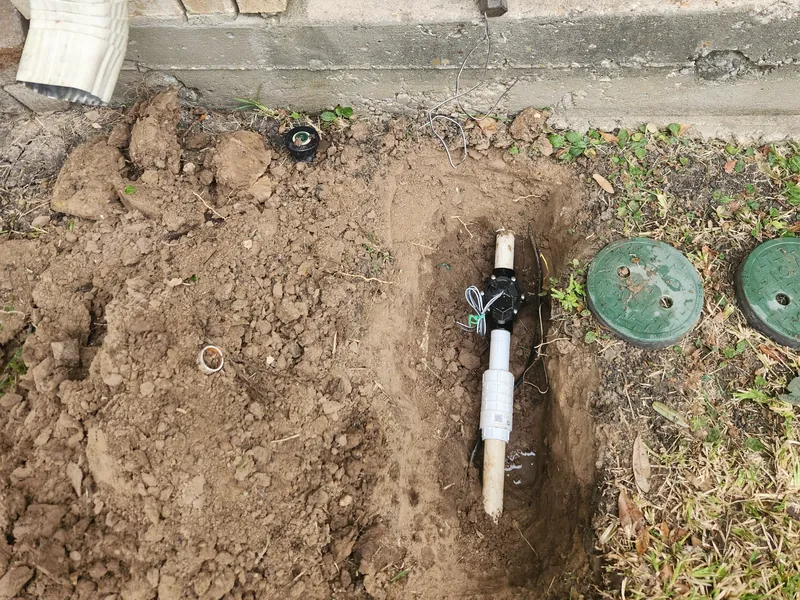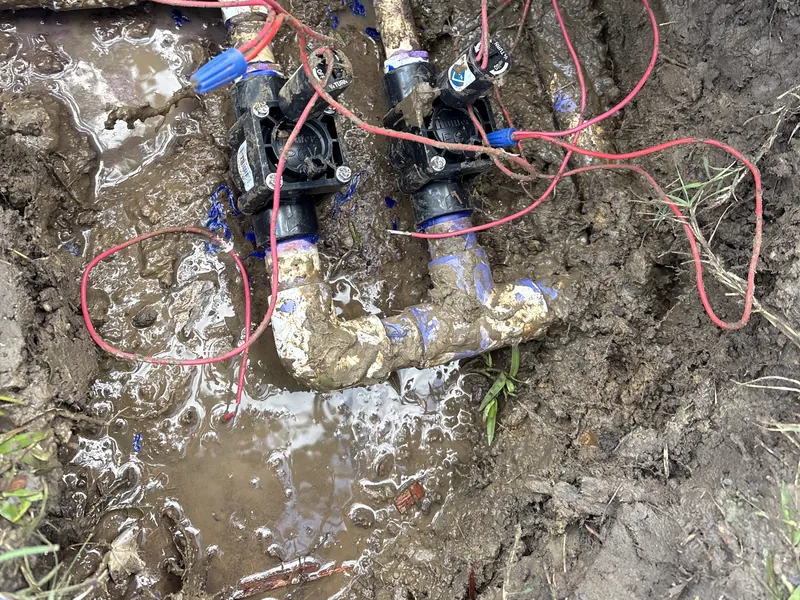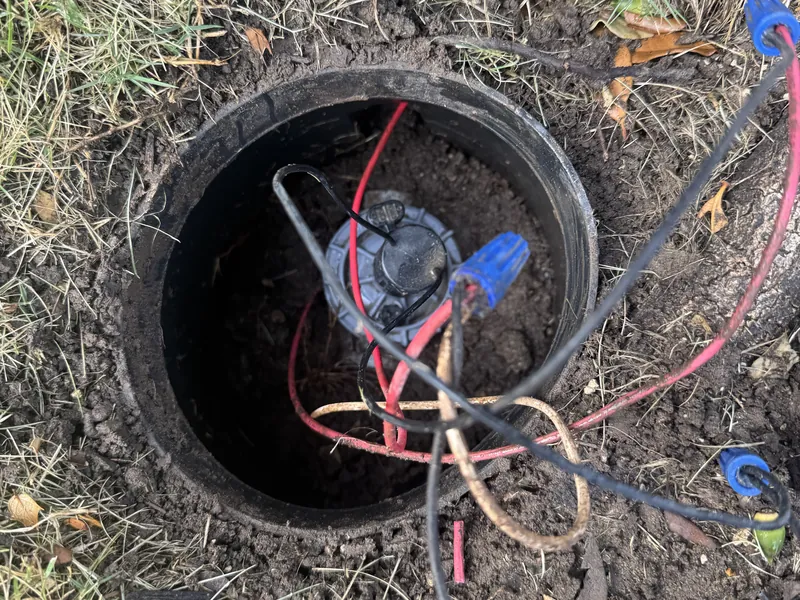
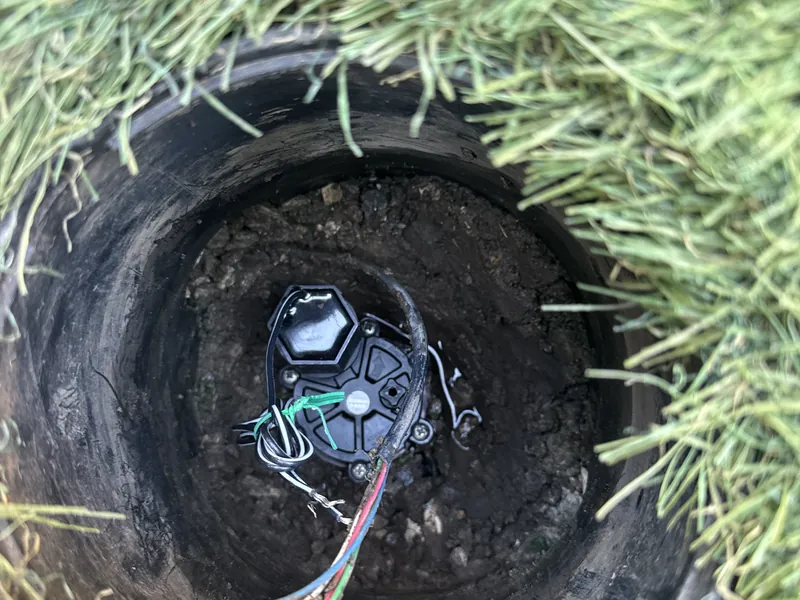
The solenoid is the electrical part on top of the valve that opens and closes it.
Solenoid replacement means testing the old solenoid, removing it, installing a compatible replacement with waterproof splices and testing the zone.
Diagnose My Sprinkler Problem See Typical Repair Cost Find a Sprinkler Pro
Signs You May Need This Repair
- Zone won’t turn on
- Zone won’t shut off
- Zone works when opened manually only
- Intermittent zone
- Water around the solenoid
Common Causes
- Burned-out coil
- Stuck plunger
- Corrosion
- Surge damage
How a Technician Handles It
- Test the controller output and solenoid resistance
- Shut off water
- Replace the solenoid with a compatible part
- Make waterproof splices
- Test the zone
Repair or Replace?
A failed solenoid is usually replaced without replacing the whole valve. If the valve is also failing, valve replacement may be better.
DIY or Call a Pro?
Solenoid testing requires electrical tools, and replacing one involves the valve’s pressurized parts. A technician can confirm the diagnosis first.
Typical Cost
See our Sprinkler Solenoid Replacement Cost Guide for typical ranges. Prices vary by location, parts, access and how much diagnosis is needed.
Related Problems
- How Do I Know If My Sprinkler Solenoid Is Bad?
- Why Won’t My Sprinkler Zone Turn On?
- Why Won’t My Sprinkler Valve Open?
- Why Won’t My Sprinkler Valve Close?
Related Repairs
Frequently Asked Questions
Can I replace just the solenoid?
Usually, yes.
How is a bad solenoid identified?
With a resistance test and by operating the valve manually.
Why did my solenoid fail?
Age, corrosion, debris or electrical surges.
Bottom Line
Solenoid replacement is a targeted repair once testing confirms the solenoid has failed.
Diagnose My Sprinkler Problem See Typical Repair Cost Find a Sprinkler Pro