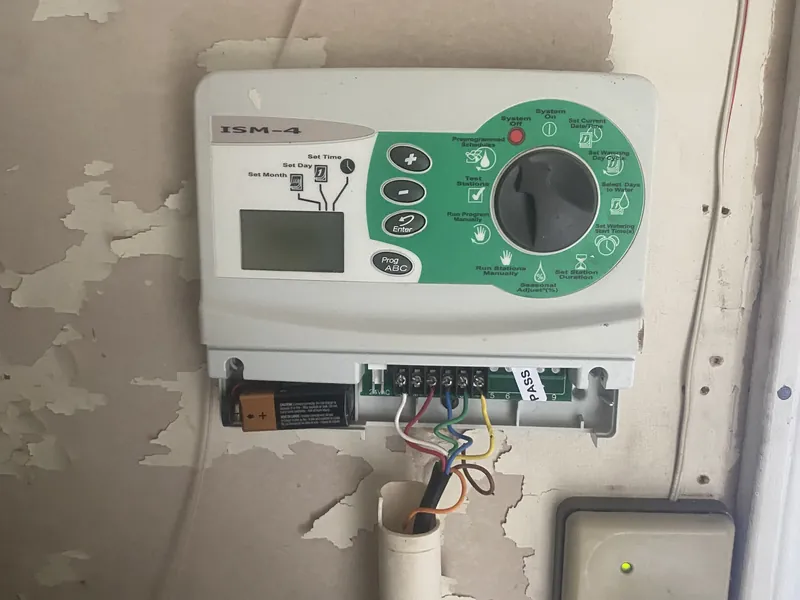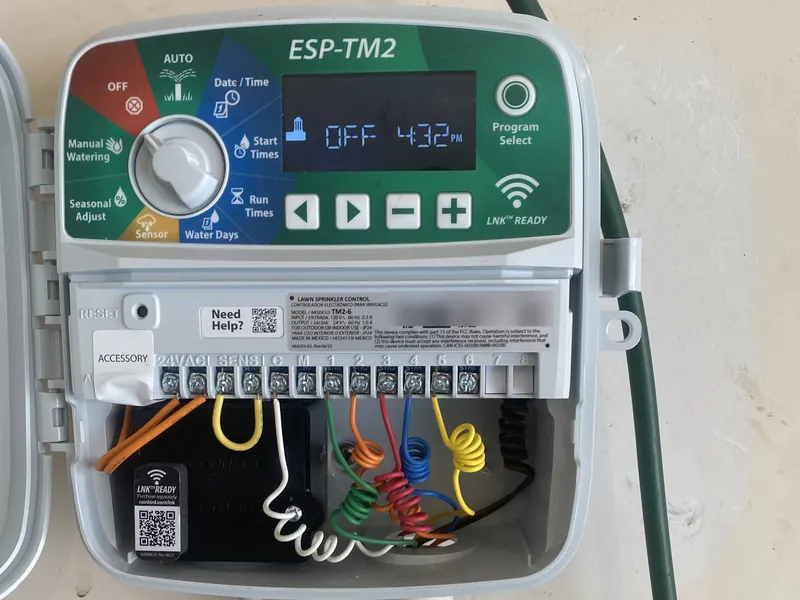
A sprinkler controller can have power and still not work correctly. Zones may not start, may run at the wrong times, or may show running with no water.
Problems range from simple settings to wiring and failed controller outputs.
Diagnose My Sprinkler Problem See Typical Repair Cost Find a Sprinkler Pro
Quick Answer
When a sprinkler controller has power but isn’t working right, the cause is often programming (start times, run times, a rain delay or seasonal adjustment), a rain sensor, loose wiring at the terminals, or a failed station output. Start by reviewing the programs and settings, then look at whether one zone or many are affected.
What You May Be Seeing
- Zones don’t start on schedule
- Zones run at the wrong times
- The controller shows a zone running but no water flows
- Only some zones respond
- Error messages on the display
- Settings reset after an outage
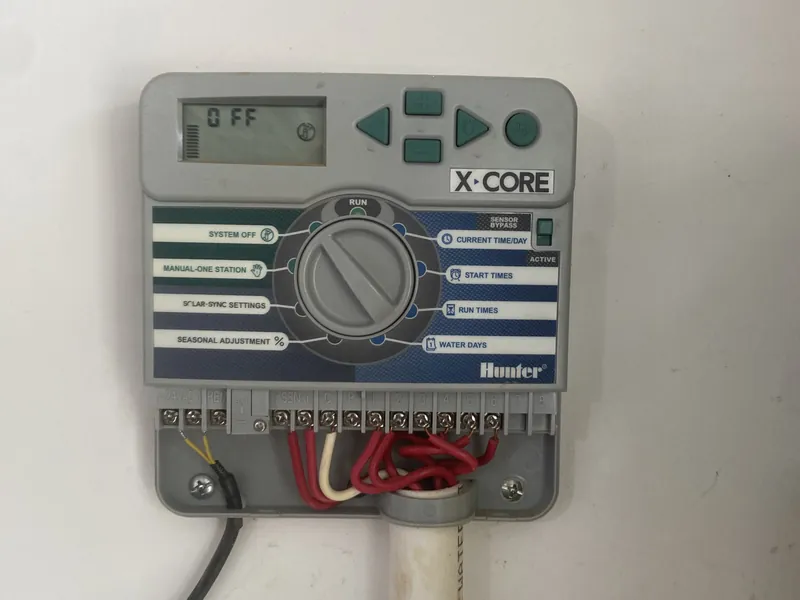
The controller decides when zones run and sends the signal to open each valve. Programming errors, sensor settings, loose wires or a failed output can each stop zones from running correctly.
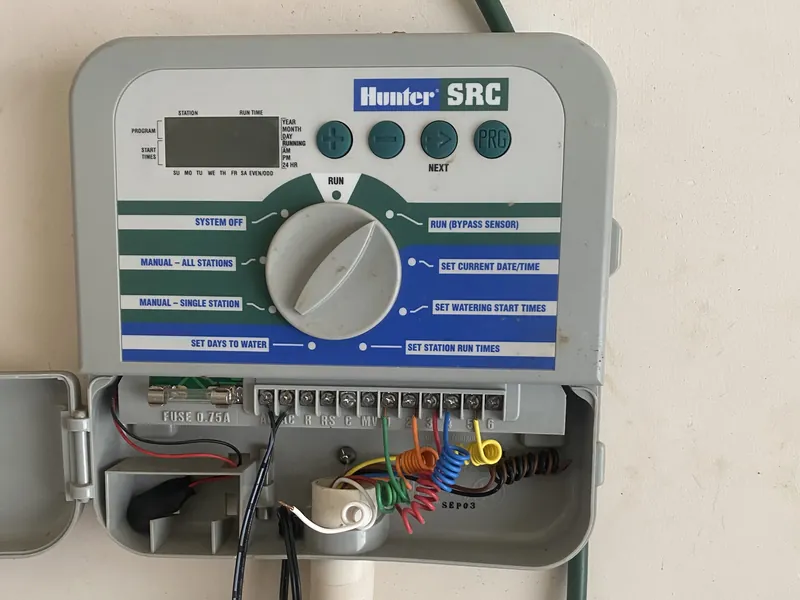
The First Question to Ask
Is the problem affecting all zones, or only some?
If all zones are affected, check programming, rain delay, the rain sensor and the common wire. If only some zones are affected, the cause may be their station outputs, field wires or valves.
If All Zones Are Affected
A setting or shared part is likely.
Common causes include:
- Programming: no start time or run times
- Rain delay or ‘off’ setting: watering suspended
- Rain sensor: holding off watering
- Seasonal adjustment: set very low
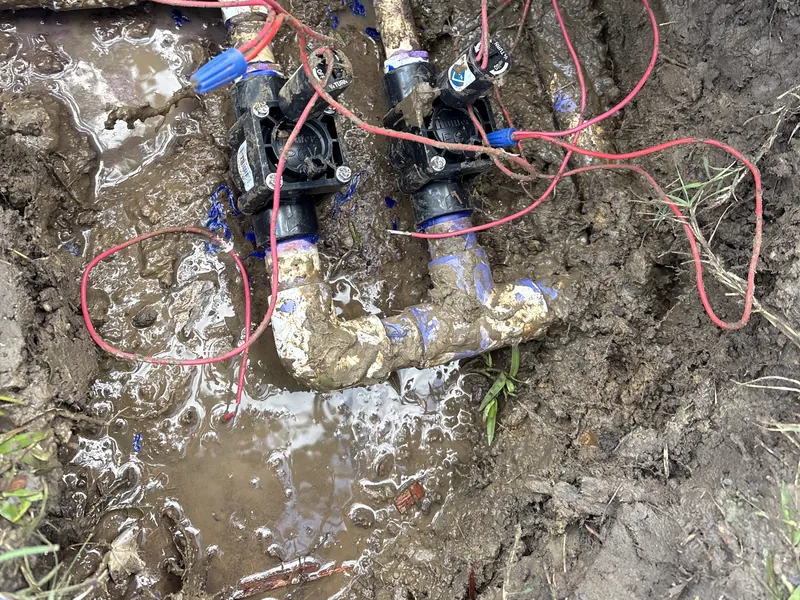
- Common wire: a shared return wire problem
If Only Some Zones Are Affected
The issue may be station-specific.
Common causes include:
- Station output failure: a damaged terminal output
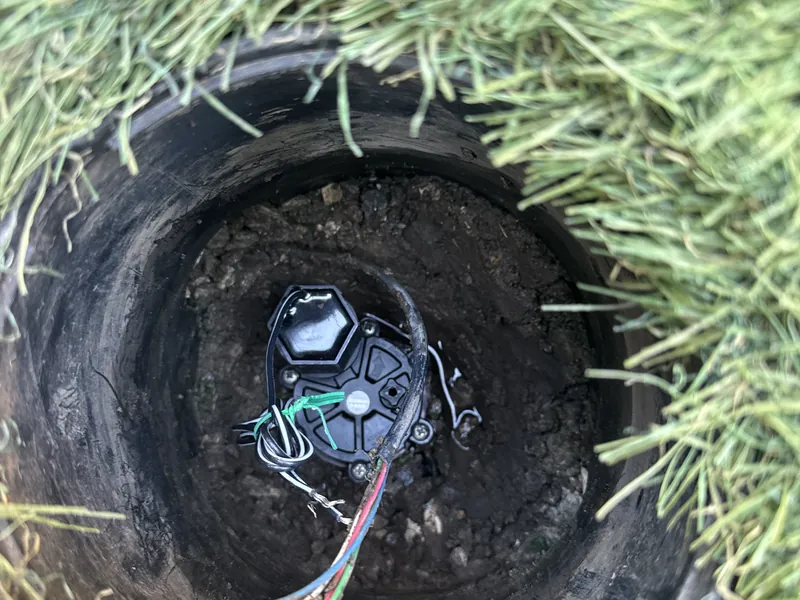
- Loose terminal wire: at the controller
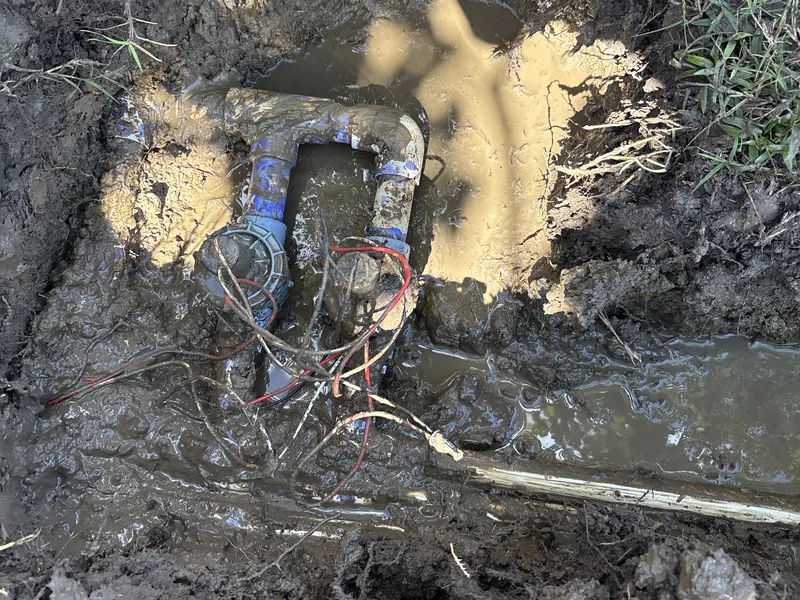
- Field wire: damaged between controller and valve
- Valve or solenoid: at the zone
The Controller Waters at the Wrong Times
Multiple programs, extra start times or an incorrect clock can make the system water unexpectedly.
After Replacing the Controller
Wires connected to the wrong terminals or a missed common wire can cause zones to fail or run out of order.
After a Storm
Surges can damage individual station outputs while the display still works.
What You Can Check Yourself
- Review start times, run times and active programs
- Check for a rain delay, ‘off’ setting or rain-sensor message
- Check the seasonal adjustment percentage
- Confirm the date and time
- Try running each zone manually
What a Technician May Test
- Station output tests
- Terminal and wiring inspection
- Rain sensor test
- Common-wire continuity
- Solenoid tests
Most Common Causes
- Programming error
- Rain delay or rain sensor
- Seasonal adjustment
- Loose terminal wire
- Station output failure
- Wiring problem
- Failed controller
Repair or Replace?
Many controller problems are fixed with programming changes or wiring repairs. Replacement makes sense when testing confirms failed outputs or the controller is unreliable or outdated.
When to Call a Sprinkler Professional
Call a professional if:
- Settings look right but zones still don’t run
- Only some zones respond
- The controller was damaged in a storm
- You’re considering a new or smart controller
Find a sprinkler repair pro or read our emergency shutoff guide if water won’t stop.
Related Sprinkler Problems
- Why Is My Sprinkler Controller Screen Blank?
- Why Are My Sprinklers Running Twice?
- Why Won’t My Sprinkler System Turn On?
- Why Are Multiple Sprinkler Zones Not Working?
- Why Won’t My Sprinkler Zone Turn On?
Related Repairs
Typical Repair Cost
What you pay depends on the cause, the parts and your area. See our Sprinkler Controller Replacement Cost Guide for typical ranges. Prices vary, and only an on-site diagnosis can give you an actual quote.
Frequently Asked Questions
Why isn’t my sprinkler controller watering?
Check for a rain delay, rain-sensor shutoff, missing start times or a low seasonal adjustment first.
Can a rain sensor stop my controller from working?
Yes. A wet or faulty sensor can suspend watering.
How do I know if my controller is bad?
A technician tests the station outputs. If outputs fail while wiring and valves test fine, the controller is the likely problem.
Should I replace my controller with a smart controller?
That depends on your system and goals. A technician can explain the options.
Bottom Line
A sprinkler controller that isn’t working right often has a settings or sensor issue. Checking programs is the safest first step.
If the settings are correct, a technician can test outputs, wiring and valves to find the cause.
Diagnose My Sprinkler Problem See Typical Repair Cost Find a Sprinkler Pro