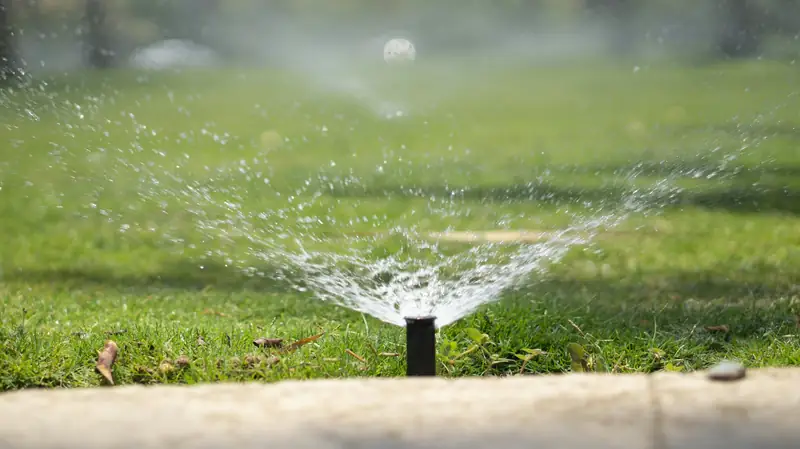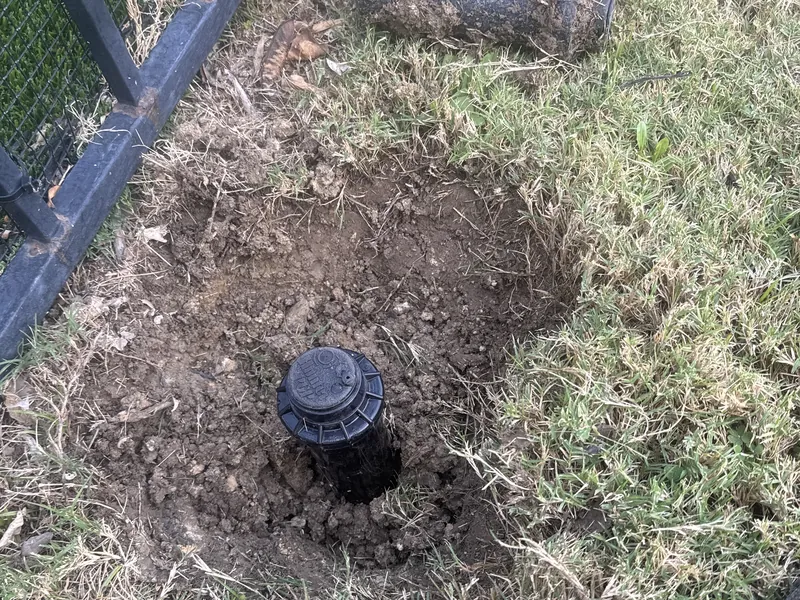
Rotors are sprinkler heads that turn slowly to water larger areas. When a rotor stops turning, it sprays in one direction, soaking one spot and leaving the rest dry.
Rotor problems are usually caused by debris, worn internal gears, low pressure or an adjustment problem.
Diagnose My Sprinkler Problem See Typical Repair Cost Find a Sprinkler Pro
Quick Answer
A rotor that won’t rotate is usually clogged with debris, has worn or stripped internal gears, isn’t getting enough pressure, or has its arc set incorrectly. If several rotors in a zone have the same problem, low pressure is more likely. A single stuck rotor is often replaced.
What You May Be Seeing
- A rotor sprays in one direction only
- A rotor turns partway and stops
- A rotor turns slowly or erratically
- Dry spots in the rotor’s coverage area
- Overwatered spot where the rotor is stuck
Rotors use water flowing through internal gears to turn the nozzle. Debris, worn gears or low flow can stop that rotation.
The First Question to Ask
Is it one rotor, or several rotors in the zone?
One stuck rotor usually has a problem with that head. Several stuck rotors suggest low pressure or debris throughout the zone.
If One Rotor Won’t Turn
The head itself is the likely problem.
Common causes include:
- Debris in the head: jams the gears or nozzle
- Worn or stripped gears: from age
- Arc set incorrectly: limited rotation
- Damaged head: from mowers or traffic
If Several Rotors Won’t Turn
A zone-wide issue is likely.
Common causes include:
- Low pressure: not enough flow to drive the gears
- Leak in the zone: reducing pressure
- Debris in the lines: after a repair or break
After a Pipe Repair
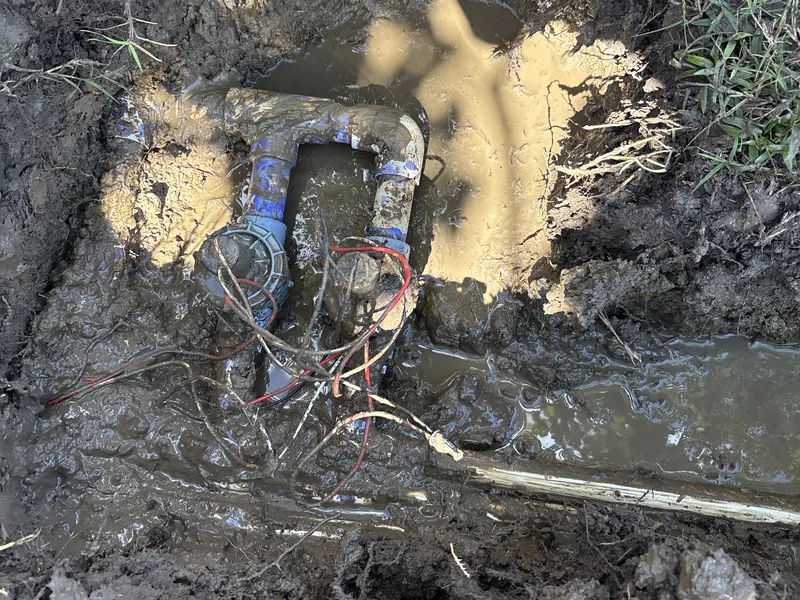
Debris can enter the lines during a repair and lodge in rotor heads.
The Rotor Turns Back and Forth Over a Small Area
The arc may be set too narrow, or the head may be partly worn.
Rotors in One Zone Turn Slowly
Low pressure from a leak or too many heads can slow rotation.
What You Can Check Yourself
- Count how many rotors are affected
- Clear grass and soil around the head
- Watch for wet spots or bubbling that suggest a leak
- Compare pressure to other zones
What a Technician May Test
- Pressure check
- Rotor inspection and cleaning
- Arc and radius adjustment
- Leak inspection
Most Common Causes
- Debris in the rotor
- Worn or stripped gears
- Low pressure
- Arc set incorrectly
- Damaged head
Repair or Replace?
Rotors with worn gears are usually replaced rather than repaired. If several rotors are affected, fixing the pressure problem comes first.
When to Call a Sprinkler Professional
Call a professional if:
- Several rotors won’t turn
- Replacement rotors don’t solve it
- You suspect a leak or pressure problem
Find a sprinkler repair pro or read our emergency shutoff guide if water won’t stop.
Related Sprinkler Problems
- Why Won’t My Sprinkler Head Pop Up?
- What Should I Do About a Broken Sprinkler Head?
- Why Is My Sprinkler Water Pressure Low?
- Why Does My Lawn Have Dry Spots Even With Sprinklers?
Related Repairs
Typical Repair Cost
What you pay depends on the cause, the parts and your area. See our Sprinkler Head Replacement Cost Guide for typical ranges. Prices vary, and only an on-site diagnosis can give you an actual quote.
Frequently Asked Questions
Why did my sprinkler rotor stop turning?
Debris, worn gears, low pressure or an arc setting are the most common causes.
Can low pressure stop rotors from turning?
Yes. Rotors need enough flow to drive their internal gears.
Should I repair or replace a rotor that won’t turn?
Rotors with worn gears are usually replaced.
Why does my rotor only spray one spot?
It’s stuck and not rotating, so all its water goes in one direction.
Bottom Line
A rotor that won’t rotate is usually clogged, worn or short on pressure.
A technician can check pressure, clean or adjust the rotor, or replace it.
Diagnose My Sprinkler Problem See Typical Repair Cost Find a Sprinkler Pro