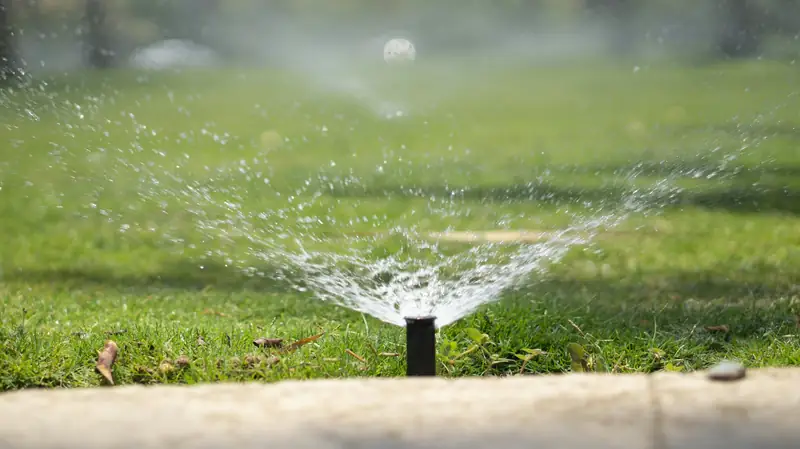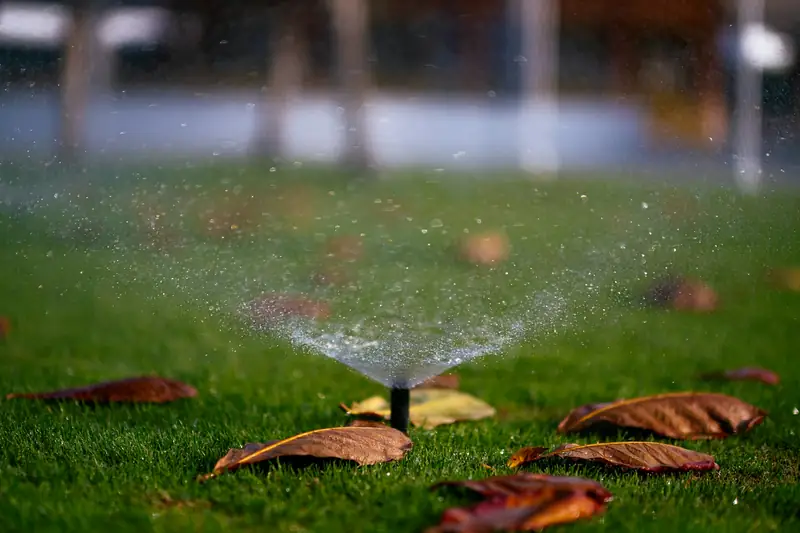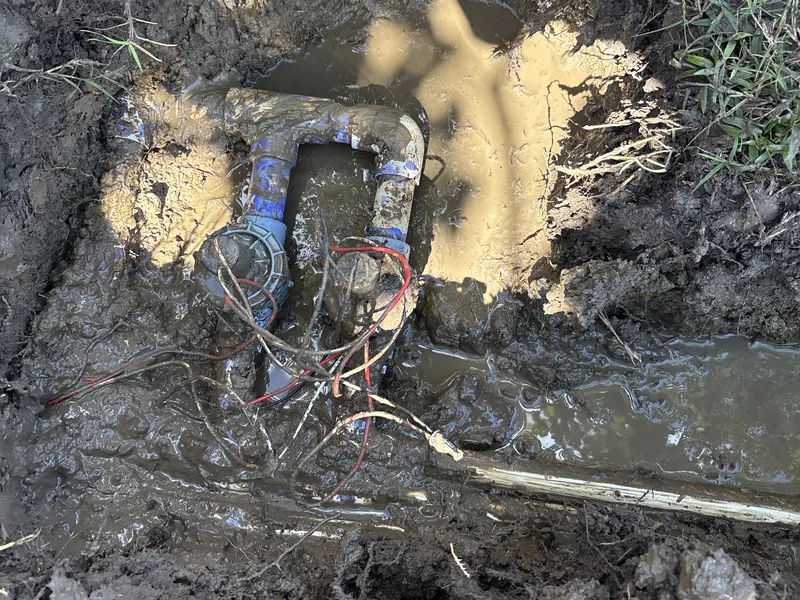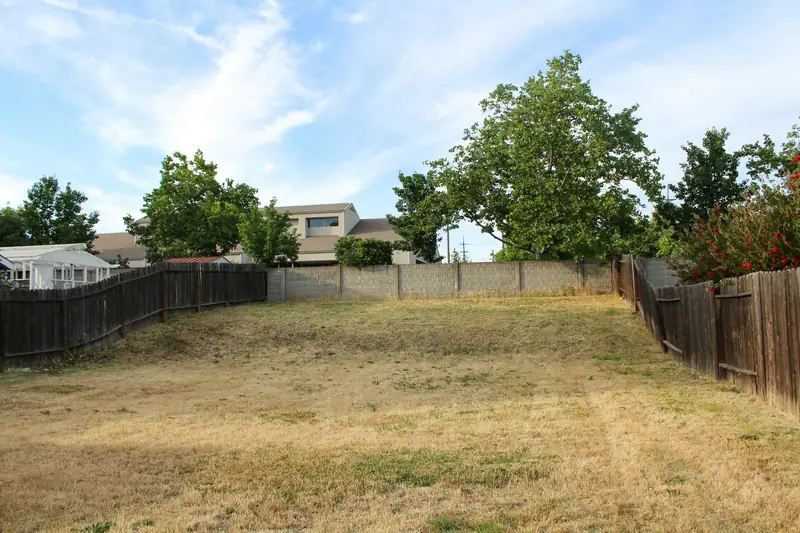
Brown or dry patches in a lawn that’s watered regularly usually mean those spots aren’t getting enough water.
The cause is often a coverage problem: a broken, blocked or misaligned head, low pressure or heads that don’t overlap properly.
Diagnose My Sprinkler Problem See Typical Repair Cost Find a Sprinkler Pro
Quick Answer
Dry spots in a sprinkler-watered lawn are usually caused by broken or clogged heads, heads that are tilted or blocked by grass, low pressure, poor head spacing or mismatched nozzles. Watch the zone run and see whether water actually reaches the dry area.
What You May Be Seeing
- Brown patches in otherwise green grass
- Dry areas between heads
- Dry edges along walks or drives
- Dry areas near one head
- Patches that don’t improve with longer watering
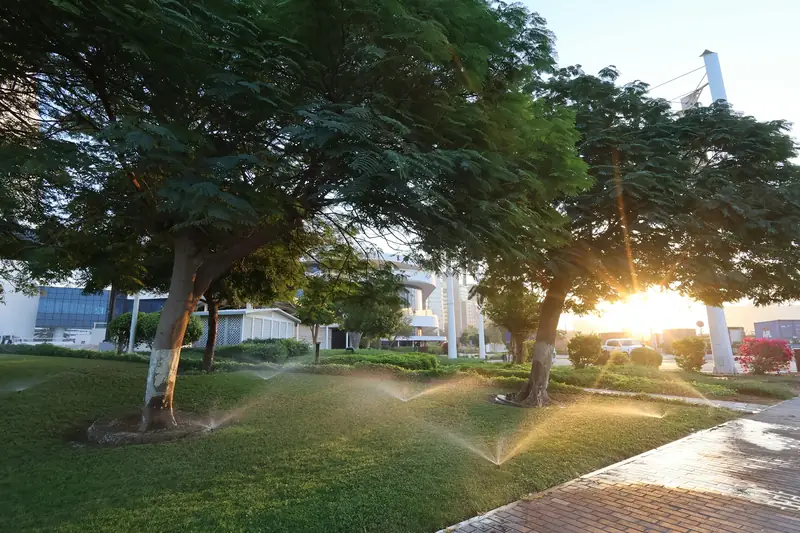
Sprinkler systems rely on overlapping spray from neighboring heads. When a head is blocked, broken or weak, the overlap breaks down and dry spots appear.
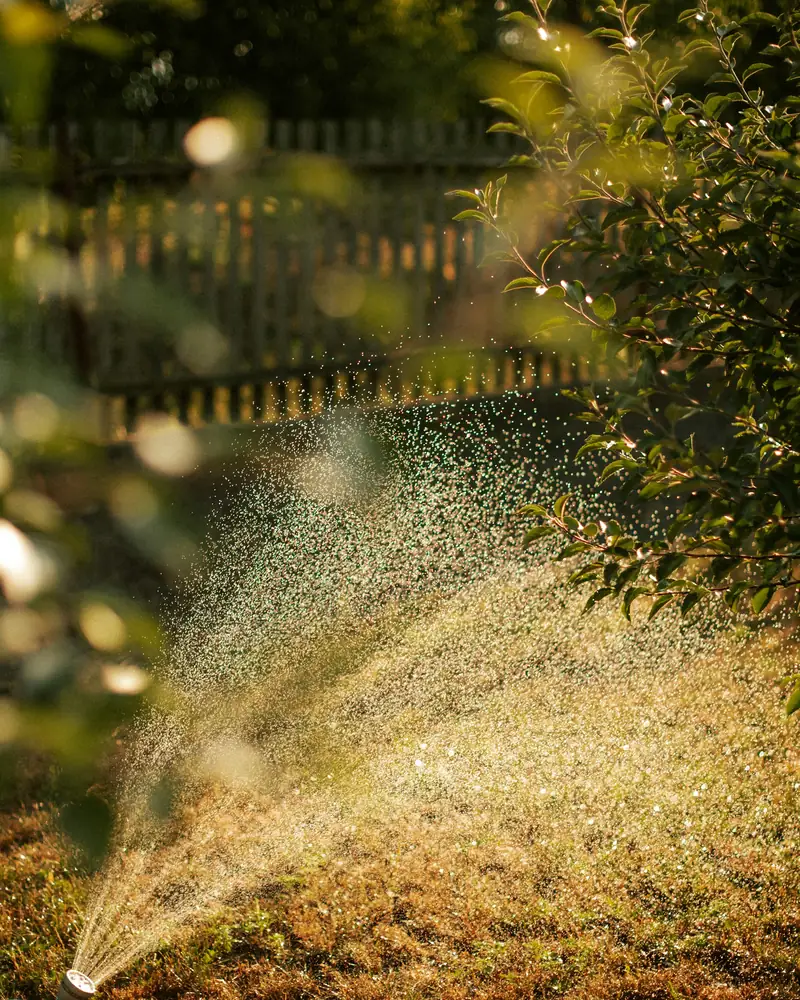
The First Question to Ask
When the zone runs, does water reach the dry area?
If water doesn’t reach the area, it’s a coverage problem (head, nozzle, pressure or spacing). If water reaches the area but it stays dry, soil, slope or schedule may be involved.
If Water Doesn’t Reach the Dry Area
Coverage is the problem.
Common causes include:
- Broken or clogged head: no spray or weak spray
- Head blocked by grass: spray deflected
- Tilted or sunken head: spray misdirected
- Low pressure: short throw
- Wrong nozzle or arc: not covering the area
If Water Reaches the Area but It Stays Dry
Other factors are involved.
Common causes include:
- Run time too short: not enough water
- Runoff on slopes: water runs off before soaking in
- Compacted soil: water doesn’t soak in
Dry Spots Along Sidewalks and Driveways
Edges are often under-watered when heads are misaligned or set to the wrong arc.
Dry Spots Between Rotors
Rotors that aren’t rotating, or low pressure, can leave gaps between heads.
Dry Spots That Started Suddenly
A broken head, a new leak or a stuck rotor can cause sudden dry areas.
What You Can Check Yourself
- Watch each zone run and note where water lands
- Clear grass from around heads
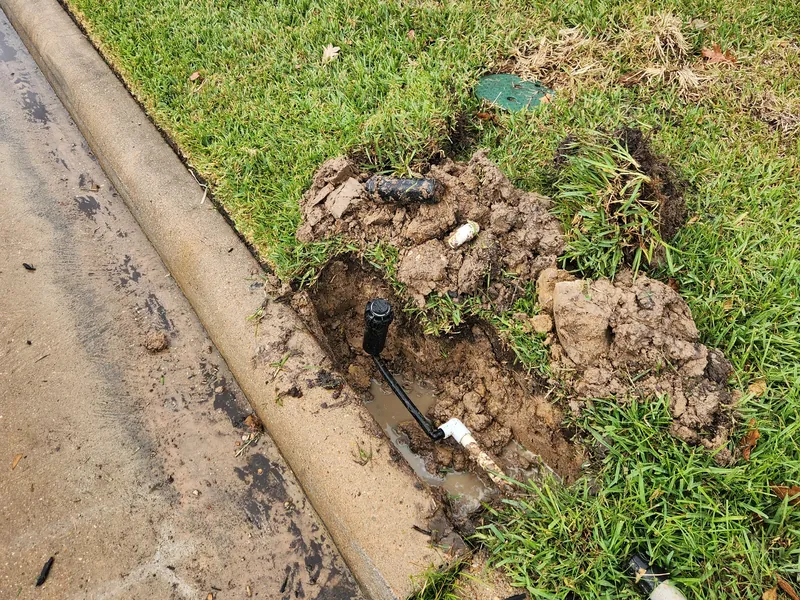
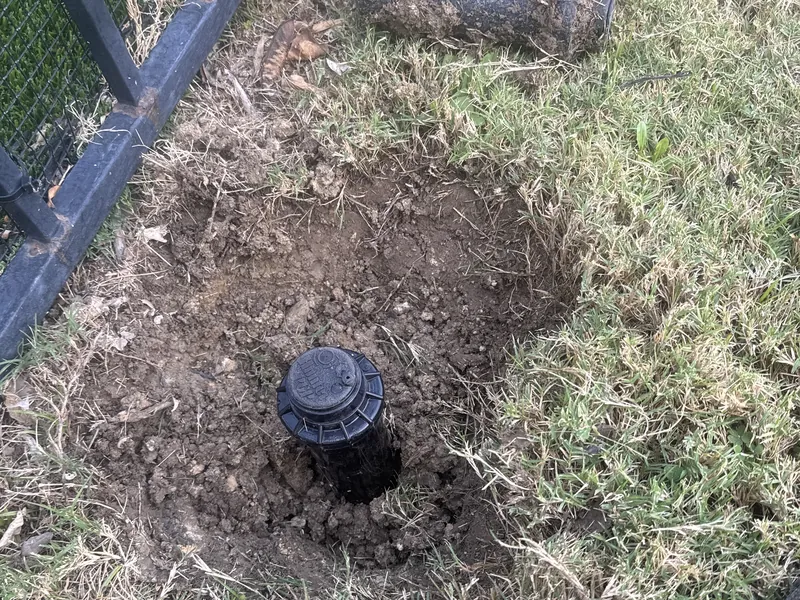
- Look for broken, tilted or sunken heads
- Check whether rotors are turning
- Compare pressure between zones
What a Technician May Test
- Coverage check
- Pressure readings
- Nozzle and arc adjustments
- Head inspection and replacement
Most Common Causes
- Broken or clogged heads
- Blocked or tilted heads
- Low pressure
- Poor spacing
- Wrong nozzles or arc settings
- Run time too short
Repair or Replace?
Most dry spots are fixed with head repairs and adjustments. Zones with poor spacing or mismatched heads may benefit from redesign or renovation.
When to Call a Sprinkler Professional
Call a professional if:
- Adjustments don’t fix the dry spots
- Several heads are damaged
- Pressure seems low
- Coverage was never good
Find a sprinkler repair pro or read our emergency shutoff guide if water won’t stop.
Related Sprinkler Problems
- Why Is My Sprinkler Water Pressure Low?
- What Should I Do About a Broken Sprinkler Head?
- Why Isn’t My Sprinkler Rotor Rotating?
- Why Won’t My Sprinkler Head Pop Up?
- Why Is Water Pooling After My Sprinklers Run?
Related Repairs
- Sprinkler System Adjustment
- Sprinkler Head Repair
- Sprinkler Pressure Troubleshooting
- Sprinkler System Renovation
Typical Repair Cost
What you pay depends on the cause, the parts and your area. See our Sprinkler Head Replacement Cost Guide for typical ranges. Prices vary, and only an on-site diagnosis can give you an actual quote.
Frequently Asked Questions
Why does my lawn have dry spots even though I water?
Usually a coverage problem: a broken, blocked or misaligned head, low pressure or poor spacing.
Will watering longer fix dry spots?
Not if the water isn’t reaching the area. Fixing coverage is usually more effective.
Can low pressure cause dry spots?
Yes. Low pressure reduces how far water sprays.
Do I need a new sprinkler system for dry spots?
Usually not. Most dry spots are fixed with repairs and adjustments.
Bottom Line
Dry spots in a sprinkler-watered lawn are usually coverage problems that can be fixed with head repairs and adjustments.
A technician can check coverage and pressure and adjust or replace heads where needed.
Diagnose My Sprinkler Problem See Typical Repair Cost Find a Sprinkler Pro