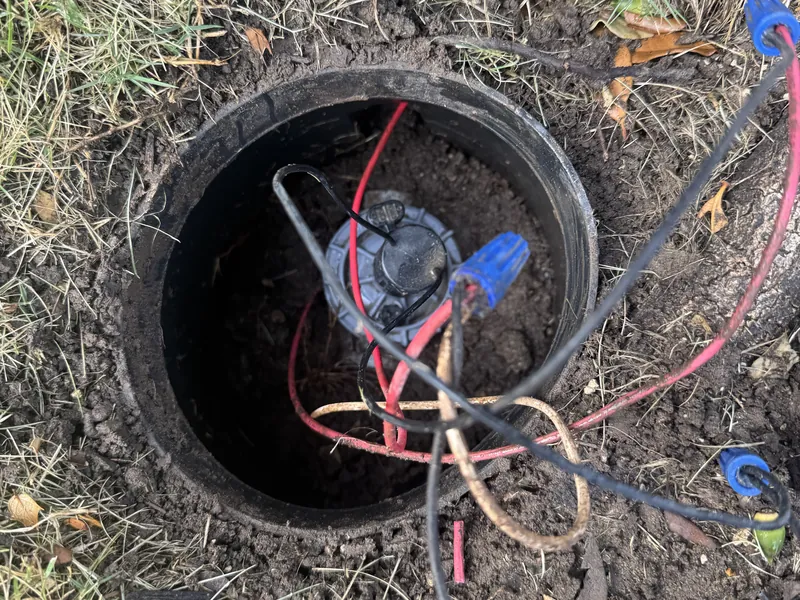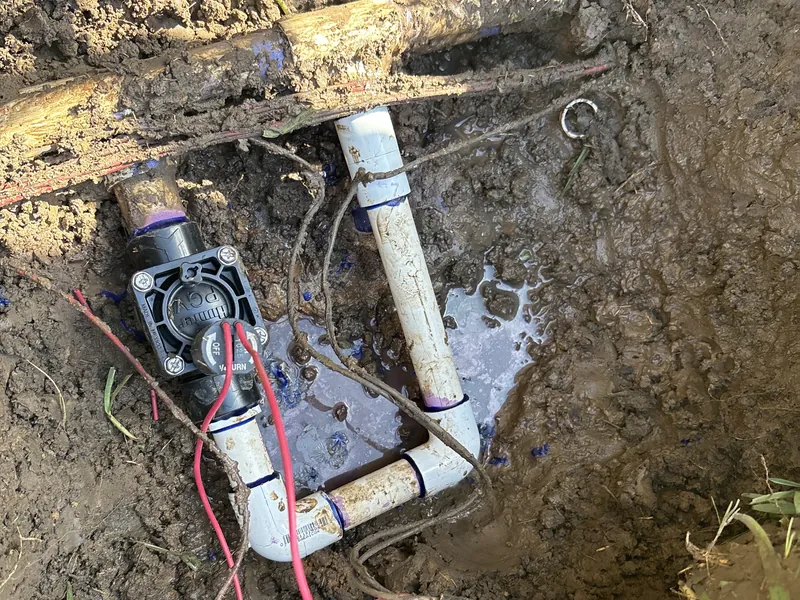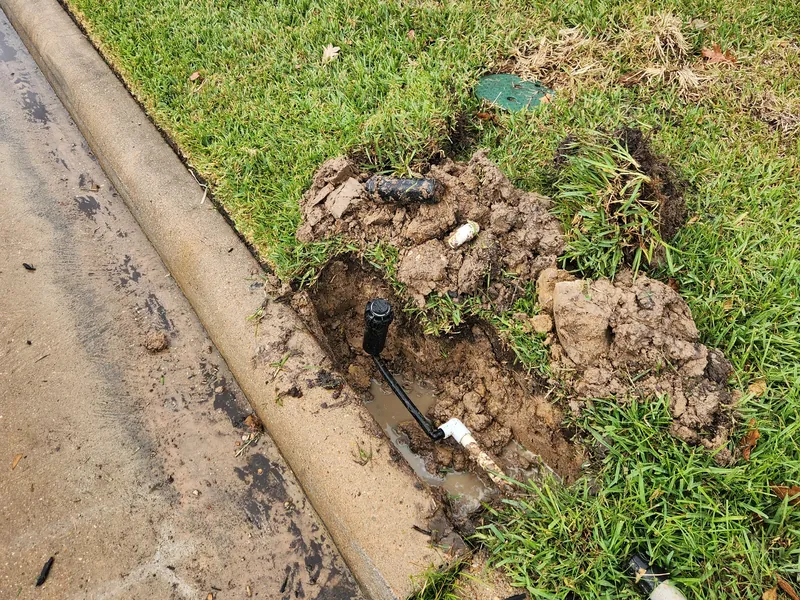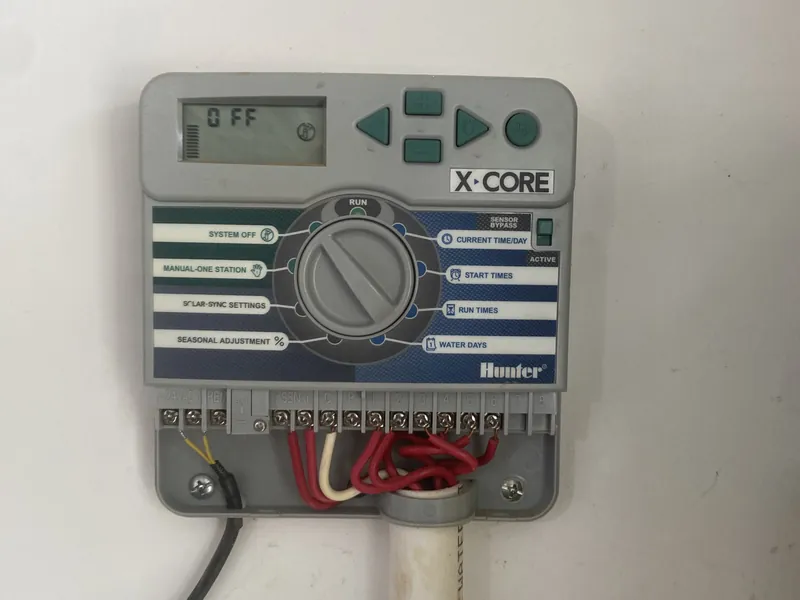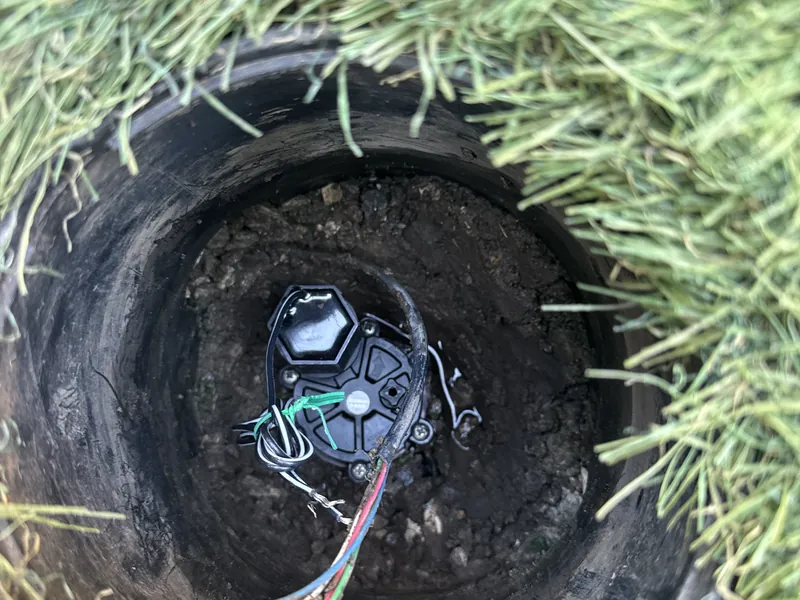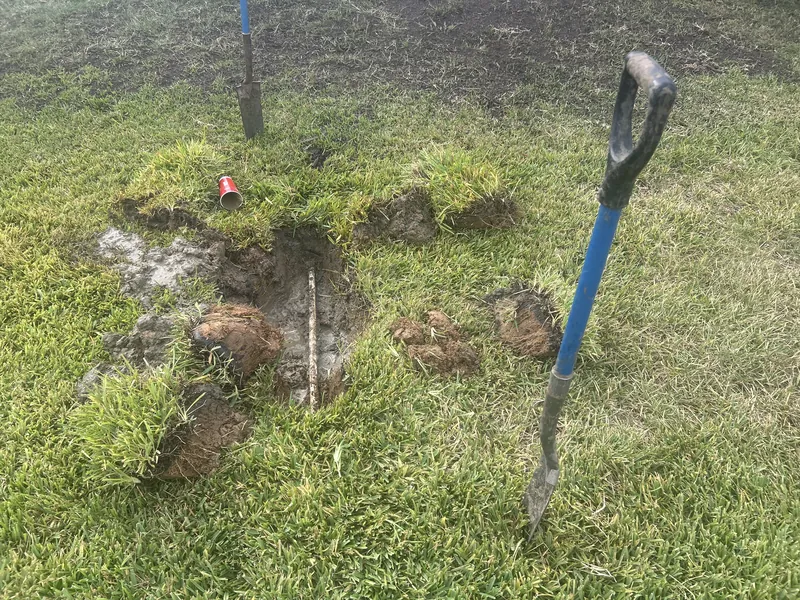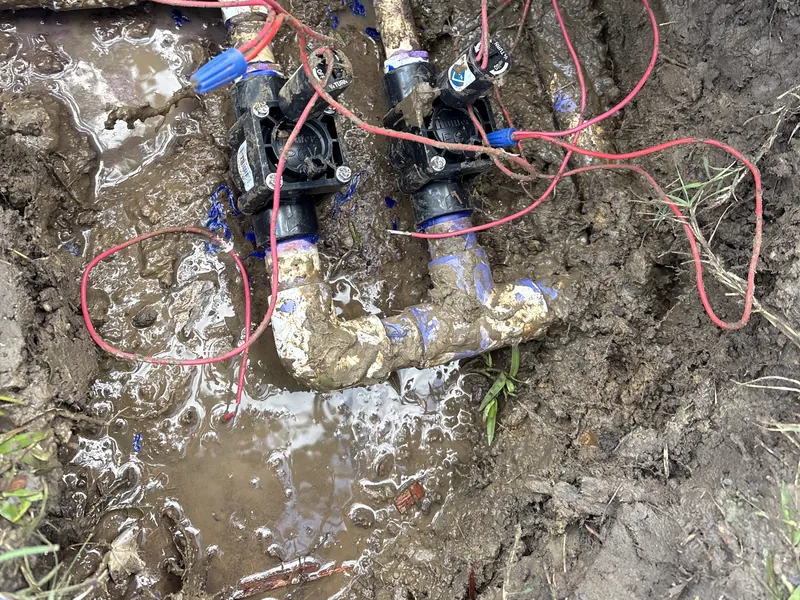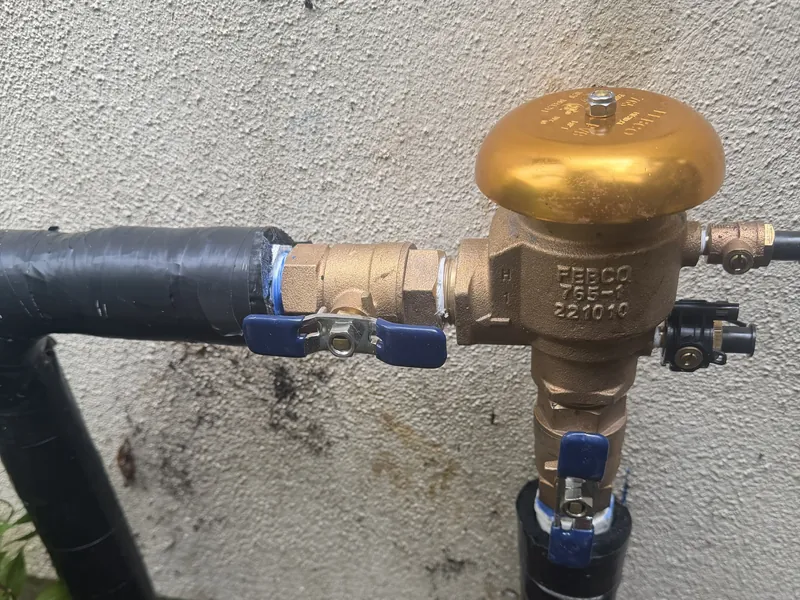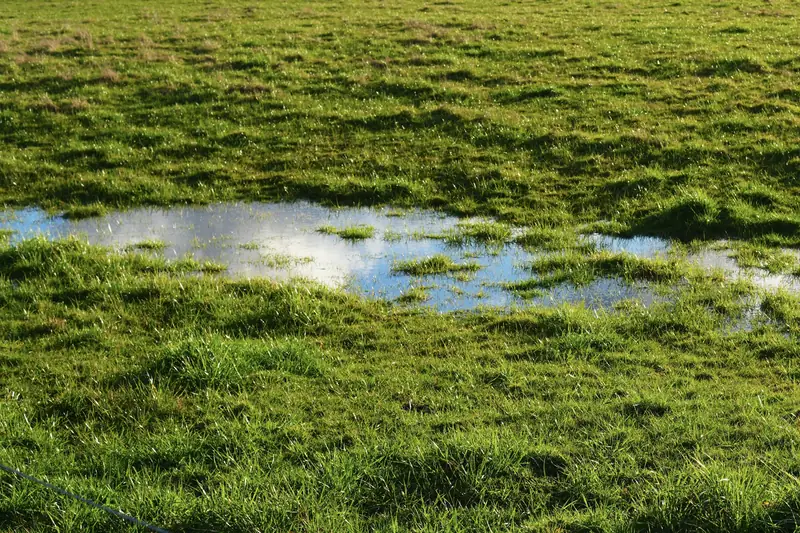
Opening a valve box and finding it full of water is common, and it doesn’t always mean something is broken.
Rain, irrigation runoff and groundwater can collect in valve boxes. But a valve, solenoid, fitting or pipe leak can also fill the box, and those leaks often continue around the clock.
Diagnose My Sprinkler Problem See Typical Repair Cost Find a Sprinkler Pro
Quick Answer
A valve box full of water can be caused by a leaking valve, solenoid or fitting, a nearby pipe leak, or simply rain and groundwater. The key question is whether the box refills when it hasn’t rained and the system hasn’t run. If it does, a leak is likely.
What You May Be Seeing
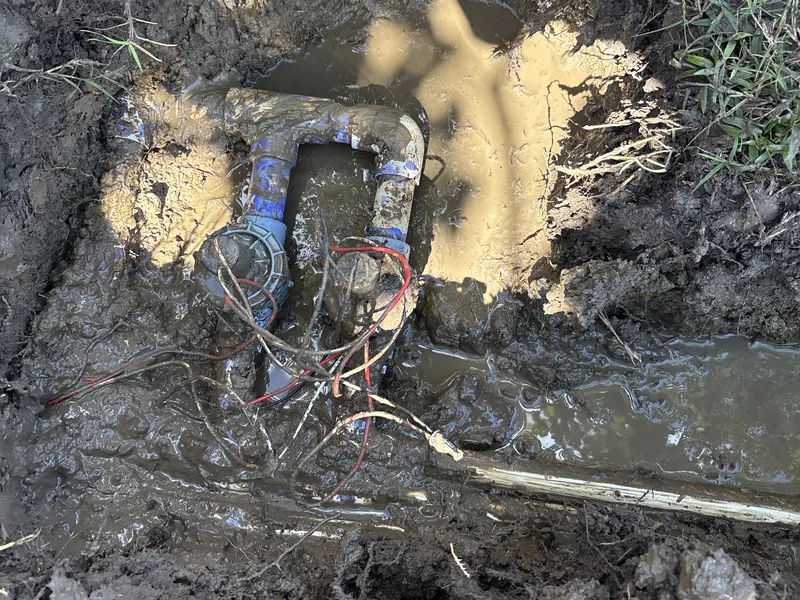
- Standing water in the valve box
- Water that refills after the box is emptied
- A soggy area around the box
- Mud or debris in the box
- A zone that won’t shut off completely
- A higher water bill
Valve boxes sit at or below grade, so water naturally collects in them. A box that stays full in dry weather, or refills quickly, points to a leak in or near the valves.
The First Question to Ask
Does the box refill when it hasn’t rained and the system hasn’t run?
If the box only has water after rain or watering, it may be drainage. If it refills in dry weather with the system off, a pressurized leak at a valve, solenoid or fitting is likely.
If the Box Refills in Dry Weather
A pressurized leak is likely.
Common causes include:
- Leaking valve or bonnet: water escaping from the valve
- Solenoid leak: around the solenoid
- Cracked fitting: on the supply side
- Mainline leak: near the valve manifold
If Water Appears Only After Rain or Watering
It may be drainage.
Common causes include:
- Rain or runoff: collecting in a low box
- High groundwater: seeping in from below
- Poor drainage: around the box
The Box Fills Only When a Zone Runs
If water appears only while a particular zone runs, look at the outlet fittings and pipe connections for that valve.
Wires in the Box Are Underwater
Splices that sit in water can corrode over time if they aren’t waterproof. A technician can check the splices while inspecting the valves.
A Zone Also Won’t Shut Off
A flooded box together with a zone that won’t stop running suggests a valve that isn’t sealing.
What You Can Check Yourself
- Note when the box fills: after rain, during watering or all the time
- Look for water bubbling from a valve or fitting (look only)
- Check whether any zone keeps running
- Watch the water meter with the system off, if you can read it
- Close the irrigation shutoff if water is flowing steadily
What a Technician May Test
- Valve and solenoid inspection
- Fitting and manifold inspection
- Pressure and leak tests
- Splice inspection
Most Common Causes
- Leaking valve or bonnet
- Solenoid leak
- Cracked fitting
- Mainline or manifold leak
- Rain, runoff or groundwater
Repair or Replace?
Leaks at valves and fittings are usually repaired individually. If a valve manifold has several aging valves that keep leaking, replacing them together may make sense.
When to Call a Sprinkler Professional
Call a professional if:
- The box refills in dry weather
- Water bubbles from a valve or fitting
- A zone won’t shut off
- Splices are sitting underwater
Find a sprinkler repair pro or read our emergency shutoff guide if water won’t stop.
Related Sprinkler Problems
- Why Is My Sprinkler Valve Leaking?
- Why Is My Sprinkler System Leaking?
- Why Won’t My Sprinkler Zone Shut Off?
- How Do I Know If I Have an Underground Sprinkler Leak?
- Can My Sprinkler System Cause a High Water Bill?
Related Repairs
Typical Repair Cost
What you pay depends on the cause, the parts and your area. See our Sprinkler Valve Replacement Cost Guide for typical ranges. Prices vary, and only an on-site diagnosis can give you an actual quote.
Frequently Asked Questions
Is it normal for a sprinkler valve box to have water in it?
Some water after rain or watering can be normal. A box that refills in dry weather suggests a leak.
Can a leaking valve fill the valve box?
Yes. Valve, solenoid and fitting leaks are common causes.
Should I empty the valve box?
Emptying it can help you see whether it refills and where water is coming from. Avoid opening or loosening valve parts.
Can water in the valve box damage the wires?
Splices that aren’t waterproof can corrode when they sit in water.
Bottom Line
A valve box full of water may be drainage or a leak. Whether it refills in dry weather is the best clue.
A technician can inspect the valves, solenoids, fittings and splices and repair whatever is leaking.
Diagnose My Sprinkler Problem See Typical Repair Cost Find a Sprinkler Pro