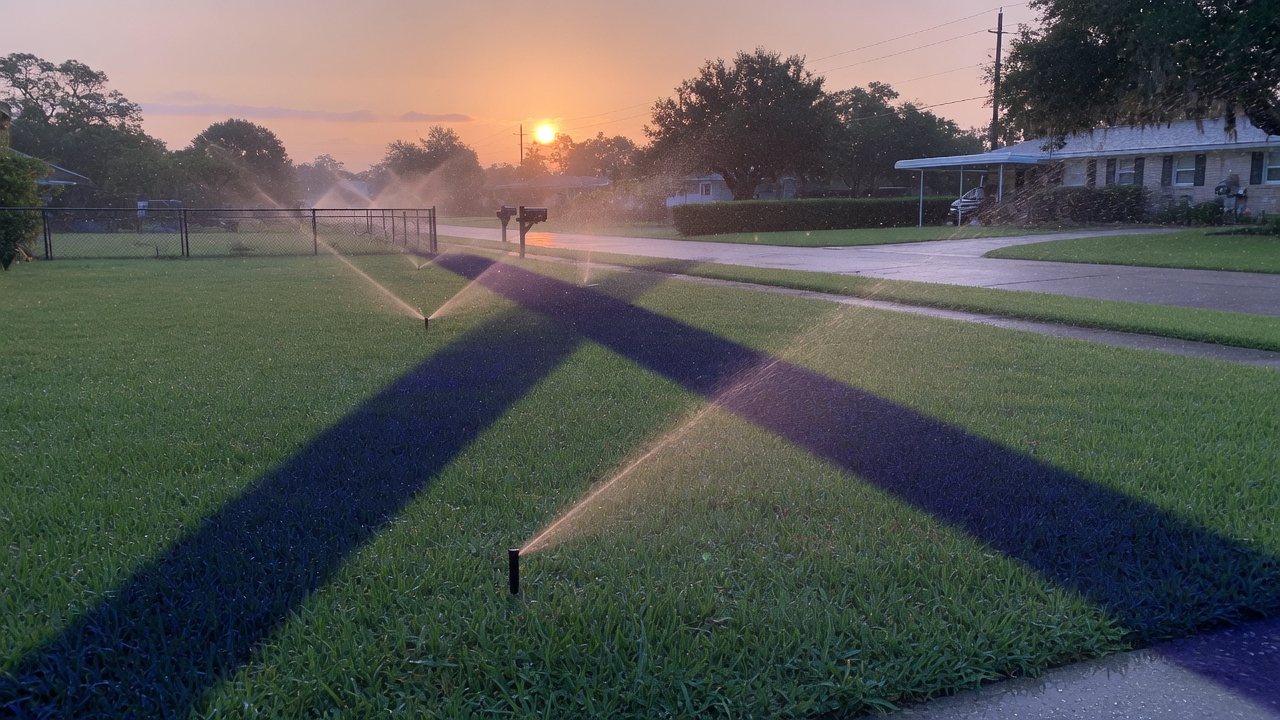
After twenty-plus years fixing sprinkler systems in Houston, I've seen the same mistakes over and over again. People run their systems every day because they figure more water equals a better lawn. Or they set it and forget it — running the same schedule in February as they do in August. Both approaches waste money and can actually hurt your grass. Here's how to get it right, season by season.
The Foundation: Understand Houston's Clay Soil
Before we talk about schedules, you need to understand what you're working with. Houston sits on expansive black clay — specifically the Houston Black soil series — which is one of the most moisture-retentive soils in the country. When it's wet, it stays wet for a long time. When it dries out completely, it turns into something close to concrete.
This means two things for irrigation. First, you don't need to water as frequently as people with sandy soil do. Second, once you let the soil dry out completely during a drought, you need to rehydrate slowly and carefully, because bone-dry clay won't absorb water quickly — it'll just sheet off the surface.
The ideal irrigation approach for Houston is deep, infrequent watering. You want to push water down 4–6 inches into the root zone, then let the soil drain and dry partially before the next cycle. Short, daily watering cycles keep the top 1–2 inches moist but never reach the root zone, which trains your grass to develop shallow roots and become more vulnerable to drought stress.
Spring Watering Schedule (March – May)
Spring is the easiest time of year for irrigation in Houston. Temperatures are moderate, evaporation is manageable, and rainfall is usually adequate to supplement. In most springs, you barely need to run your system at all from March through mid-April.
Once we get into late April and May, temperatures start climbing and rain becomes less reliable. Here's what I recommend for a typical Houston residential lawn with St. Augustine grass:
- Frequency: Two times per week, on your designated restriction days
- Duration: 20–25 minutes per zone for spray heads; 30–40 minutes for rotors
- Time of Day: Before 10am — ideally starting around 5am to finish by 8am
- Target Application: 3/4 inch to 1 inch per cycle
If you're still getting regular spring rains, you can skip cycles when you've had more than 1/2 inch in the previous 48 hours. A rain sensor handles this automatically — it's one of the best investments you can make in your irrigation system.
Summer Watering Schedule (June – August)
Summer is where things get critical. Houston summers are brutal — consistently above 90°F, humidity that makes it feel like 105°F, and evaporation rates that can eat through soil moisture faster than your system can replace it. At the same time, Houston Water's Stage 2 restrictions typically limit most addresses to twice-weekly watering.
The good news: twice a week is often enough, if you're doing it right. The key is run time. Most residential systems need to run significantly longer in summer to push water deep enough to matter:
- Frequency: Two times per week (per Stage 2 restrictions)
- Duration: 25–35 minutes per zone for spray heads; 40–50 minutes for rotors on turf areas
- Time of Day: Before 10am, always — afternoon watering loses 30–40% to evaporation
- Target Application: 1 to 1.5 inches per cycle in peak summer
Watch your lawn, not just your calendar. If you're seeing wilt (the grass blades folding or the color going from blue-green to grayish-green) in the early morning before temperatures peak, your system isn't keeping up. You may need to extend run times. If you're seeing pooling water or runoff, you're running too long per cycle — try splitting into two shorter cycles with a 30-minute soak break in between.
Stage 1 and Stage 2 Watering Restrictions Explained
Houston Water issues drought restrictions that directly affect when and how often you can run your irrigation system. Here's how they work:
Stage 1 Restrictions limit irrigation to three days per week, between 6pm and 10am. Your watering days are based on your address:
- Odd-numbered addresses: Wednesday, Saturday, Sunday
- Even-numbered addresses: Thursday, Saturday, Sunday
Stage 2 Restrictions are more severe, limiting irrigation to two days per week during the same hours:
- Odd-numbered addresses: Wednesday and Saturday
- Even-numbered addresses: Thursday and Sunday
Both stages prohibit irrigation between 10am and 6pm (prime evaporation hours) and on days not designated for your address. Fines start at $100 for a first offense and increase significantly for repeat violations. Drip irrigation generally has more flexibility under both stages — it's considered a more efficient method.
To check current restriction status in Houston: visit houstontx.gov/water or call 713-371-1400. Restriction levels can change quickly during drought events.
Fall Watering Schedule (September – November)
Fall is when a lot of people make the mistake of keeping their summer schedule running too long. Temperatures in September can still be brutal, but by October the stress on your lawn drops significantly, and by November most Houston lawns are heading toward semi-dormancy.
- September: Maintain summer schedule, watch closely for adequate rain reducing the need
- October: Reduce to once per week, shorter cycle times (15–20 minutes spray / 25–30 minutes rotors)
- November: Once every 10–14 days unless there's a dry spell — let the lawn go slightly dry before watering
Don't let Bermuda grass go into fall with too much water — it actually hardens off better and handles Houston's occasional freezes better when it goes into cooler weather on the drier side.
Winter Watering Schedule (December – February)
Most Houston lawns don't need supplemental irrigation in December through February unless there's an unusual extended dry period (which does happen). St. Augustine and Bermuda both go dormant and require very little water. Cool-season overseeding (ryegrass) does need more moisture, but Houston's winter rains usually provide it.
If we're in an unusually dry winter with no rain for two to three weeks and temperatures are staying above 40°F, you might run your system once every 2–3 weeks just to keep the soil from drying out completely. More than that is almost always unnecessary and wastes water.
The most important winter irrigation task is making sure your system is protected from freeze damage, not that it's actively running. If an extended freeze is forecast (temperatures below 28°F for more than 4 hours), shut your irrigation down and make sure your backflow preventer is insulated or covered. After February 2021, none of us take Houston winter seriously enough anymore.
Smart Controllers: Let Technology Do the Work
If you're still programming your controller manually and adjusting it four times a year, you're probably leaving water efficiency on the table. Smart Wi-Fi controllers like the Rachio 3, Hunter Hydrawise, and Rain Bird WiFi series connect to your local weather station and automatically adjust your schedule based on rainfall, temperature, wind, and evapotranspiration rates.
A properly configured smart controller can reduce irrigation water usage by 20–40% without any negative effect on lawn health. The payback period is typically 18–24 months just in water savings. We install and configure them — pricing depends on the model and your existing wiring setup, and we'll quote it upfront — then walk you through the app before we leave.
A Final Word From Mike
The best irrigation schedule is one that's based on actual observation of your lawn, not just a calendar. Walk your yard in the early morning before it gets hot. Look for wilt, dry patches, and signs of overwatering (fungal disease, spongy ground). Adjust your controller based on what you see. No article, including this one, can substitute for knowing your specific soil, sun exposure, grass type, and system coverage.
If you're not sure your system is set up to do what it should — or if you've just moved into a house with an irrigation system and have no idea how it's configured — give us a call. We'll run every zone, document what you have, set it up correctly, and make sure you leave understanding exactly how it works. That's what we do.