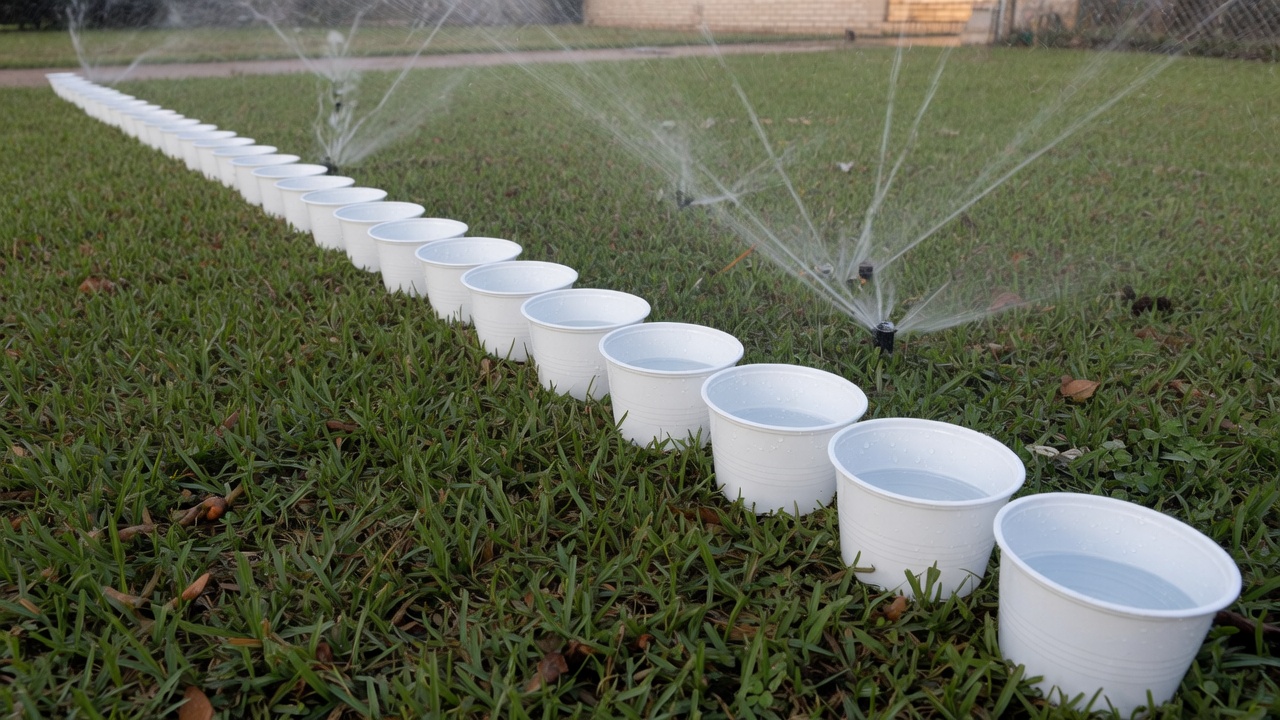
A water audit is the difference between guessing at your irrigation efficiency and actually knowing. We put calibrated catch cans on every zone, measure the real water application rate and distribution uniformity, and deliver a written report showing you exactly where your system is wasting water, where coverage is weak, and what specific changes will move the needle. For properties pursuing Houston Water rebates or commercial clients who need a documented water-use baseline, the audit is also the required paperwork.
What Your Water Bill Isn't Telling You
Your Houston Water bill is a monthly total number. It does not tell you which zone is responsible for which gallons, whether you're overwatering Zone 3 by 80 percent while Zone 5 is starving, or whether the system is applying water uniformly or just dumping it on one end of the yard. The bill is a post-mortem — the audit is the diagnosis.
In my experience auditing Houston systems, about 70 percent of residential irrigation systems waste somewhere between 20 and 40 percent of the water they deliver. That waste is spread across three main causes: misprogrammed run times (the controller), poor distribution uniformity (the heads), and outright leaks (the infrastructure). An audit measures all three. On a typical residential lot with a typical Houston water bill, correcting what the audit finds can cut the outdoor portion of your water use by a quarter to a third, year after year.
Commercial audits matter even more. A single retail center, HOA common area, or office park can waste hundreds of thousands of gallons per year through coverage problems that never show up as a "broken" system. Your property manager sees a running system, assumes it's working, and the meter keeps spinning.
What a Catch-Can Audit Measures
The core of a water audit is the catch can test. We place a grid of calibrated collection cans across each zone's coverage area, run the zone for a fixed time (usually 10 to 15 minutes), then measure the water depth in each can. From those numbers we calculate three critical metrics:
- Application rate (inches per hour): How fast the zone puts down water. Critical for setting run times correctly on Houston clay.
- Distribution uniformity (DU): A statistical measure of how evenly the zone waters. Industry standard is DU of 65 percent or higher for spray zones, 70 percent or higher for rotors. Lower than that means you're overwatering the wet spots to keep the dry spots alive.
- Scheduling coefficient: A multiplier that tells you how much extra water you need to apply to compensate for uniformity problems. A high scheduling coefficient means every zone runs longer than it would if the heads were better.
We also document static pressure at the backflow, dynamic pressure at the last head on each zone, flow rate across the system, and the controller program as-found. The full picture tells us whether any given problem is hydraulic (undersized pipe, partially closed valve), mechanical (bad heads, wrong nozzles), or programmatic (bad schedule).
Our Zone-by-Zone Audit Process
- System walk and documentation: We photograph every zone's coverage area, document the existing controller program, note head types and brands, identify visible issues.
- Pressure and flow test: Static pressure at the backflow, dynamic pressure and flow at the furthest head on each zone. Critical baseline numbers.
- Catch can grid: 12 to 24 cans per zone depending on size and shape, placed in a grid to capture edge, middle, and overlap areas.
- Run and measure: Each zone runs for a timed interval. We measure and record water depth in every can, calculate DU and application rate, and note any heads that are obviously failing.
- Controller audit: We evaluate the current schedule against what each zone actually needs, check rain sensor and freeze sensor operation, verify compliance with current Stage 1 or Stage 2 restrictions.
- Written report: You get an emailed report within 48 hours with zone-by-zone metrics, photos, recommended schedule changes you can implement immediately, and a prioritized list of hardware fixes with itemized written quotes.
Curious What Your System Is Actually Doing?
An audit is the fastest way to know. You'll walk away with numbers, a written report, and a prioritized plan — with no pressure to do any repairs.
(832) 786-4444Rebate Documentation and What Houston Water Offers
Houston Water and several area utilities offer water conservation rebates that require an audit or inspection by a TCEQ-licensed irrigator. Specific programs change year-to-year, but the common ones include rebates for upgrading to smart Wi-Fi controllers that meet EPA WaterSense certification, rebates for converting spray zones to high-efficiency rotary nozzles or drip, and for commercial properties, custom rebates tied to documented water savings through a baseline audit plus a post-retrofit re-audit.
Our audit reports are formatted to satisfy these rebate programs — meaning we include the fields utilities require: auditor license number, zone-by-zone DU, application rates, recommended equipment changes, and post-installation verification photos. If you're planning a smart controller upgrade or a nozzle retrofit, scheduling the audit first means the same visit generates the baseline data you'll need for the rebate application.
We also keep an eye on HCAD-triggered property-value implications for commercial clients whose water use is part of their operating expense profile, and on MUD-level conservation programs in Katy, Cypress, and Fort Bend — which sometimes have richer rebates than the City of Houston itself.
Full Audit vs Annual Inspection — Which Do You Need?
These are two different service levels. A full water audit with catch cans is the full diagnostic: three to four hours on site for a typical residential system, calibrated measurements, written report with rebate-ready documentation. Most people benefit from one of these once, then follow-up smaller inspections every year or two.
An annual inspection is lighter — 60 to 90 minutes on site, walking every zone, visually checking coverage, pressure-checking the system, reviewing the controller program, and flagging problems for repair. It's the right ongoing service for a system that's been audited recently or a system you just want checked and kept in good shape. We often bundle the annual inspection with the annual backflow test or spring startup visit to save you a separate trip charge.
If you're new to a property, you've had a big water bill jump, or you're pursuing a rebate, get the full audit. If your system is in good shape and you just want a yearly checkup, an annual inspection is plenty.
What We've Typically Found on Houston Audits
Pattern recognition is the payoff of having audited hundreds of Houston systems. Here's what we find most often: (1) spray and rotor zones scheduled for the same run time, even though spray heads apply water four times faster — the single most common programming error; (2) one broken head per zone on average, which drops the zone's distribution uniformity dramatically; (3) rain sensors that are present but wired through a bypass because the previous owner "got tired of it"; (4) controllers set for 1999 rules, not 2024 restrictions; (5) static pressure north of 80 PSI, causing premature fitting failures and head leaks; (6) MP rotator retrofits that were done incorrectly, mixing MP rotators and fixed sprays on the same zone; and (7) a drip zone quietly clogged with grit because the filter was never installed.
Every one of those is fixable, and most are inexpensive. The value of the audit is knowing which of them actually apply to your system — instead of throwing parts at every problem at once.
Pricing and How We Quote
Water audits are flat-fee priced based on zone count and property size, given as a written quote before we start. Commercial audits for properties larger than a residential half acre are quoted after a brief walk-through because they involve more zones and longer data collection. Annual inspections are priced separately and can be bundled with other visits (backflow, winterization) for a discounted combined rate. No surprise charges — any repair recommendations in the report are quoted separately, in writing, and you decide which to proceed with.
Call for a specific quote based on your system size and whether you need a full audit for rebate purposes or a lighter annual inspection.
Frequently Asked Questions
How long does a water audit take?
For a typical residential system with 6 to 10 zones, about three to four hours on site plus report preparation time. Commercial systems scale up from there.
Do I need to be home during the audit?
Not for the whole thing. We do like to do a short walk-through with you at the start to understand any specific concerns, then you're free to leave or work while we run the zones and collect data.
What's a "good" distribution uniformity number?
Industry benchmarks: DU of 65 percent or higher for spray zones, 70 percent or higher for rotors, 90 percent or higher for drip. Most Houston residential systems we audit come in between 45 and 60 percent, which is well below those targets and means significant water waste.
Can you audit a system you didn't install?
Yes — that's most of our audit business. We're brand-agnostic and we have no problem auditing systems put in by any contractor. The audit is about measurement, not about selling you a new system.
Does an audit include any repairs?
No, the audit is diagnostic only. Any repairs recommended in the report are quoted separately in writing, and you approve them before we touch anything. That way the audit stays neutral — we're not motivated to find "problems" just to generate repair work.
Is an audit worth it for a small residential property?
Usually yes, if outdoor watering is a noticeable part of your water bill or if you haven't had the system professionally reviewed in several years. The most common outcome is a written schedule change that pays for the audit in one summer.
Do you audit commercial properties?
Yes, and we have specific experience with HOA common areas, retail and office parks, religious campuses, and public spaces across greater Houston. Commercial audits include baseline water-use analysis, full system documentation, and rebate-application-ready reports.