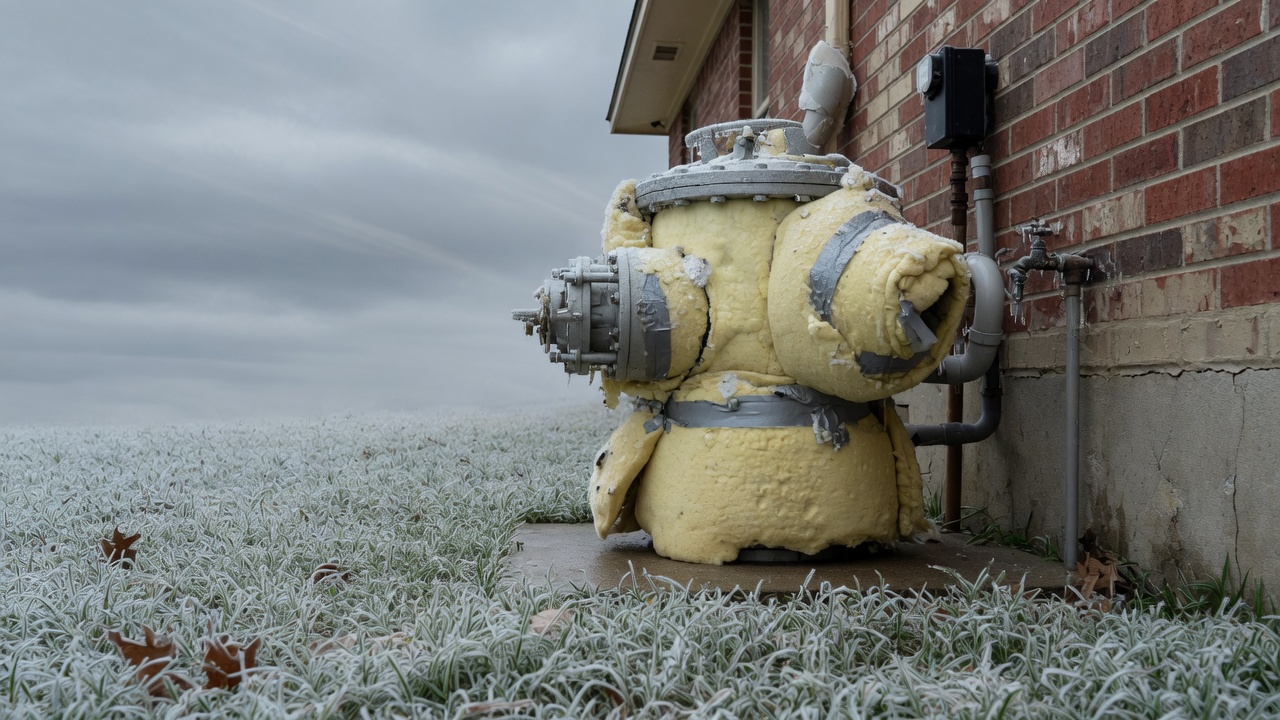
Houston doesn't blow out sprinkler systems with compressed air every fall the way Denver or Minneapolis does — but we are absolutely cold enough to break your backflow preventer, crack your mainline, and split the bonnets off your zone valves in one bad freeze. Seasonal winterization and spring startup are the two service visits that protect the investment you've already made in your system.
Houston Freezes Harder Than It Looks
It's tempting to think of Houston as "too warm to worry about freeze damage." That thinking is exactly what cost homeowners all over the city millions of dollars after the February 2021 freeze, when the greater Houston area sat below 32 degrees for roughly four straight days. I've repaired freeze damage from that event every year since — and minor freezes in 2022, 2023, and 2024 added more.
Houston also freezes in a particularly damaging way. Because temperatures drop below 32 and then climb back above it within a single 24-hour cycle, PVC and brass go through thermal expansion stress over and over. Water trapped inside the backflow assembly or inside the above-grade portion of the mainline freezes, expands, cracks the container, and then when it thaws, you have a slow leak that might not show up until summer. We call those "April leaks" and they're one of our most common detection calls.
Anything above grade is vulnerable. The backflow assembly itself — a brass pressure vacuum breaker or reduced-pressure assembly sitting two to three feet above the soil — is the single most common freeze victim. Exposed mainline at the wall of the house is second. Valve boxes with standing water in them (because the gravel drain silted up) can freeze the top of a zone valve and crack the bonnet. All of it is preventable with about an hour of fall winterization.
What Freeze Damage Looks Like in Spring
- Backflow assembly is visibly cracked, leaking from the top, or has water spraying from a relief valve
- Water pools around the backflow assembly base every time the system runs
- A zone valve weeps continuously even when the zone isn't called
- Pressure is notably lower than last year on every zone
- One or more zones won't pressurize at all — split lateral underground
- Master valve or isolation valve handle won't turn — internal components are cracked
- Sprinkler heads weep when their zone is off (cracked body from freeze)
- Meter moves with everything off — indicates a live leak we can trace
Our Winterization Checklist
Houston winterization is not the same as northern-climate "blowouts." We don't typically pump compressed air through the whole system because most of our pipe is deep enough to stay above freezing underground. What we do protect is everything above ground and the electrical side of the controller.
- Shut off and isolate the backflow: We close the incoming supply ball valve, then open both test cocks and the downstream shutoff to fully drain the brass body. Water left inside a closed backflow is what cracks it.
- Insulate the backflow assembly: We install or replace a TCEQ-approved backflow insulation cover (not a towel and a trash bag — a proper polyester-filled cover that still allows the relief valve to vent).
- Drain the aboveground mainline section: Any exposed stub between the tap and the backflow gets drained through its bleed or by cracking a union.
- Check valve boxes for water: We pump out any standing water from valve boxes so frozen ice doesn't sit on the valve bonnets.
- Set the controller to OFF or Winter mode: We set a minimal winter schedule (or OFF) depending on your lawn type, and verify the freeze sensor is wired and working.
- Label the shutoff: We add a bright label to your shutoff location so if a hard freeze event is forecast, you or a neighbor can find and close it in 30 seconds.
- Pre-freeze bulletin: We text clients before the big freeze events with a short "shut this off, wrap this, unplug the timer" reminder — no charge.
Spring Startup Inspection — The Other Half
Winterization and spring startup are a pair. The startup inspection in March or April is where we find any damage that snuck through and reset the system for a Houston growing season. This visit typically runs 60 to 90 minutes on a residential system and is the single highest-value service call of the year.
- Pressurize slowly: We reopen the supply valve slowly with the downstream side open, so pressure ramps instead of hammering the PVC — fast repressurization is how freeze-cracked pipe actually fails visibly.
- Walk every zone: We run every zone from the controller and watch coverage. Heads that are broken, buried, misaligned, or leaking get flagged.
- Check backflow for winter damage: The #1, #2, and relief valves get a visual and functional check. If your annual backflow test is due (see our backflow testing service), we can do both visits together.
- Rain sensor and freeze sensor test: Glass of water on the rain sensor, or trigger pad on the freeze sensor — confirm the controller actually responds.
- Re-time the schedule for spring: Spring soil is often already saturated from winter rains — we ramp up run times gradually and set the seasonal adjust appropriately rather than dumping summer run times onto wet ground.
- Written report: You get an emailed report with photos of any issues, a list of recommended repairs, and a written quote for anything that needs fixing. No surprise charges, no pressure.
Hard Freeze in the Forecast?
Book winterization this week. One hour now beats a four-figure repair in April. Spring startup slots fill up fast — schedule both at once.
(832) 786-4444What's at Risk if You Skip It
The cheap, predictable cost is a freeze-damaged backflow assembly. Brass body cracks, internal check valves distort, and the whole unit has to be replaced — including the brass itself, the labor to remove and install, and the annual test we're required to do on the new assembly. The less-cheap, less-predictable cost is freeze damage to the aboveground mainline that then doesn't surface until the first summer watering. That's when a hairline freeze crack opens up under pressure, turns into a buried leak, and you're looking at a leak detection call plus repair plus the four months of high water bills leading up to it.
The most expensive outcome I've seen is a cracked mainline near the foundation that ran undetected long enough to saturate the soil under the slab. The sprinkler repair was a few hundred bucks. The foundation call was not. Winterization is cheap insurance, and if that's all I do on a property in February, I sleep fine knowing the risk is handled.
Who Really Needs a Spring Startup
If any of the following apply, a spring startup is worth every penny: you had any hard freeze event over the winter (pretty much every Houston winter now), your backflow is due for its annual test, you haven't walked your own zones yet this year, you have a smart controller and want it re-trained for the season, or you have a property you manage remotely and want photos of current state. I do annual startups for a lot of commercial landlords and out-of-state owners for exactly that reason.
Pricing and How We Quote
Winterization and spring startup are both flat-fee visits priced on system size (zone count) and given as a firm written number before we start. Any repairs we find during the visit are a separate quote, also written, also firm, also pre-approved before we touch anything. We don't do "while we were in there" billing.
Call for a specific quote based on your zone count and which service you need — or book them together as a package for the year.
Frequently Asked Questions
Do I really need to winterize in Houston? It's so mild here.
Any winter that gets below 28 degrees overnight, yes. Since 2021 that's been every winter. The backflow insulation cover alone has saved clients four-figure repair bills — it's one of the highest ROI items on the system.
Do you blow out the pipes with compressed air?
Only on specific systems that need it — for example, properties with exposed pipe runs or high-elevation zones where gravity drainage isn't reliable. Most Houston residential systems only need the aboveground components drained and insulated, not a full blowout.
I turned my system off for the winter — do I still need spring startup?
Recommended, yes. Turning off the controller doesn't undo any freeze damage that occurred over winter. The startup visit is where we pressurize safely and catch any damage before it becomes a summer leak.
My lawn is still green in January — can I just keep running the system?
On St. Augustine and zoysia that goes dormant, reduce run times sharply and run only in extended dry weeks. On Bermuda, it's dormant and brown anyway and barely needs water. What we really don't want is the system running the night of a hard freeze, because water sitting in a head overnight can crack it.
When's the best time to schedule winterization?
Late November through mid-December is ideal. Once the first hard freeze is in the 10-day forecast, everyone calls at once and we book out fast.
Can spring startup be combined with my backflow test?
Yes, and I strongly recommend it. Same trip, same hour, efficient for everyone. We're licensed backflow testers as well as irrigators so one visit handles both.